Liverpool. Close enough for me to visit frequently. Far enough that for some reason I don’t. I need to spend more time here. Having just come off the back of a weekend of visiting old friends, I decided to decompress with a trip to the Walker Art Gallery, to check out the John Moores Painting Prize, 2025.
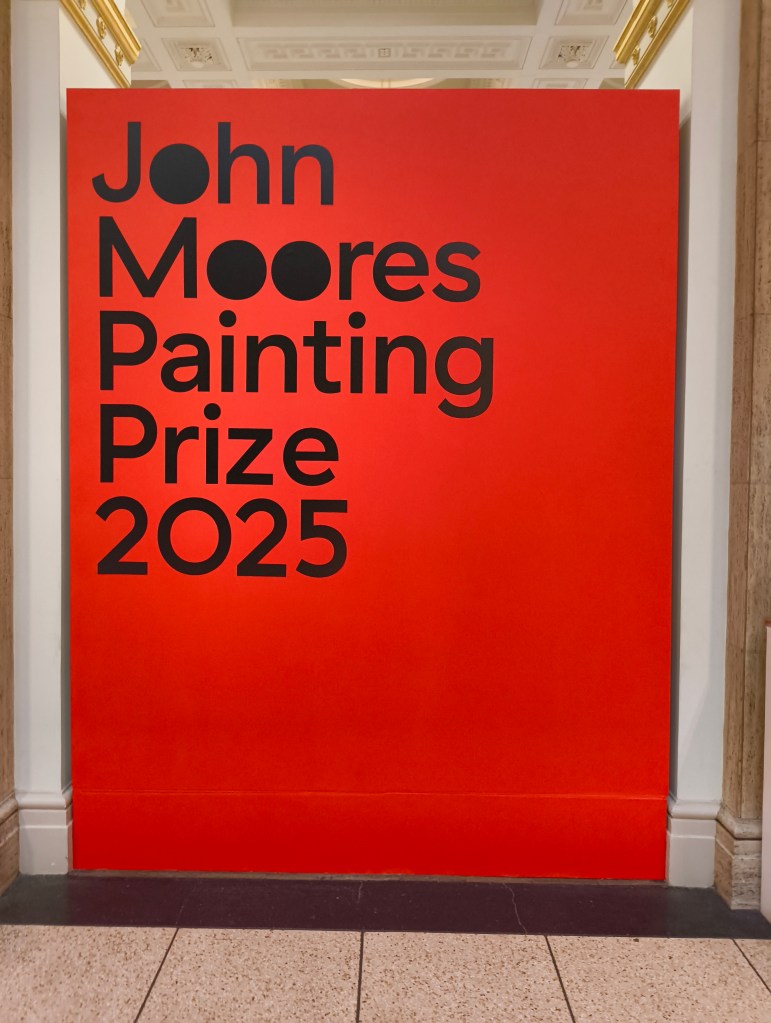
My awareness of this prize was boosted by the win of Ally Fallon, a member of the Apollo Painting School, who I would put money on being integral to the future of painting in not only the Northwest, but Britain as a whole. To see one of their own crowned winner only goes to support this view.
Before the paintings themselves, an introductory zone. We are treated to a video of the judge panel – they explain their process of selection. It is quite interesting as each brings something new to the table. Louisa Giovanelli is one of the panel. Just last week I caught her in conversation with Matthew Holman and have been a fan of her work for a while. Here, I could be snide and comment on the fact that she has awarded a prize to effectively one of her students – being the spearhead behind the Apollo painting school, but that would be to detract from both the work of Fallon and of Giovanelli.
This introductory area also provides tips for looking. It is a wonderful addition. High praise.
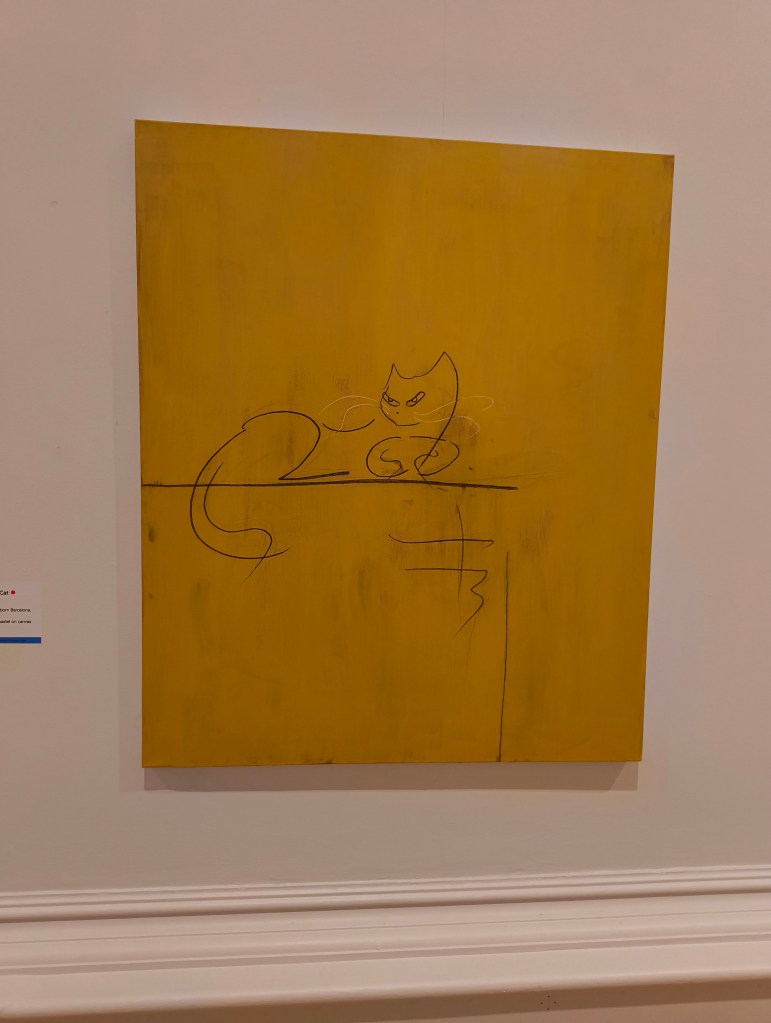
The exhibition itself takes place in the large, airy, white walled left- wing of the Walker Art Gallery. It is standard, unpretentious, and acts as a balanced canvas, on which to display quite a variety of paintings. The expected flow, however, is rather uni-directional. The four connected rooms present a clear path to follow, which – in a sense – prioritises the paintings in this first room.
There are, in total, 71 paintings. That is a lot. Each very individual. The time spent with any painting is conditioned by this large number. That said, this is a shortlist from a body of over 3,000 submissions – the jury had their work cut out.
Lists, in each room, indicate prices, and whether a work has sold. A number have. This is a brilliant opportunity for these artists. I wonder what the consignment agreement is between the Walker and the artists. 50/50 split? Or will the artists keep the entire amount?
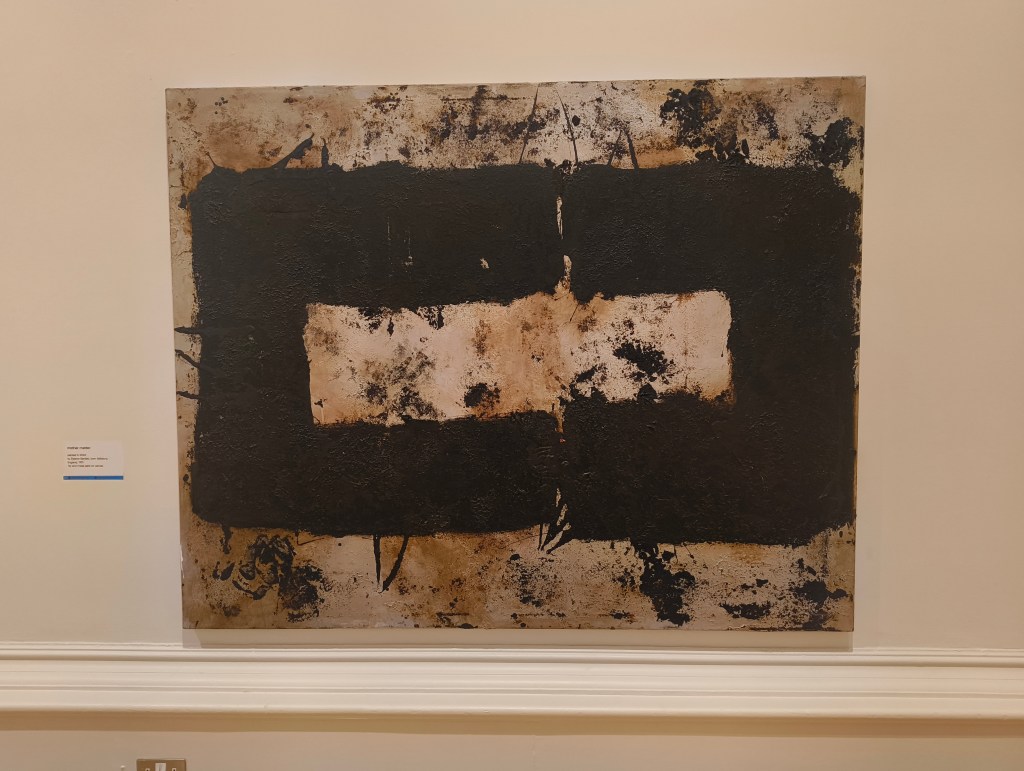
The first painting I am taken by is mother matter by Eleanor Bartlett. It is tar and metal paint on canvas. It is industrial, almost primal, and very forceful in its angularity and depth. One could imagine it in the most beautifully sparse concrete building. I think it has a lot of aesthetic value to it.
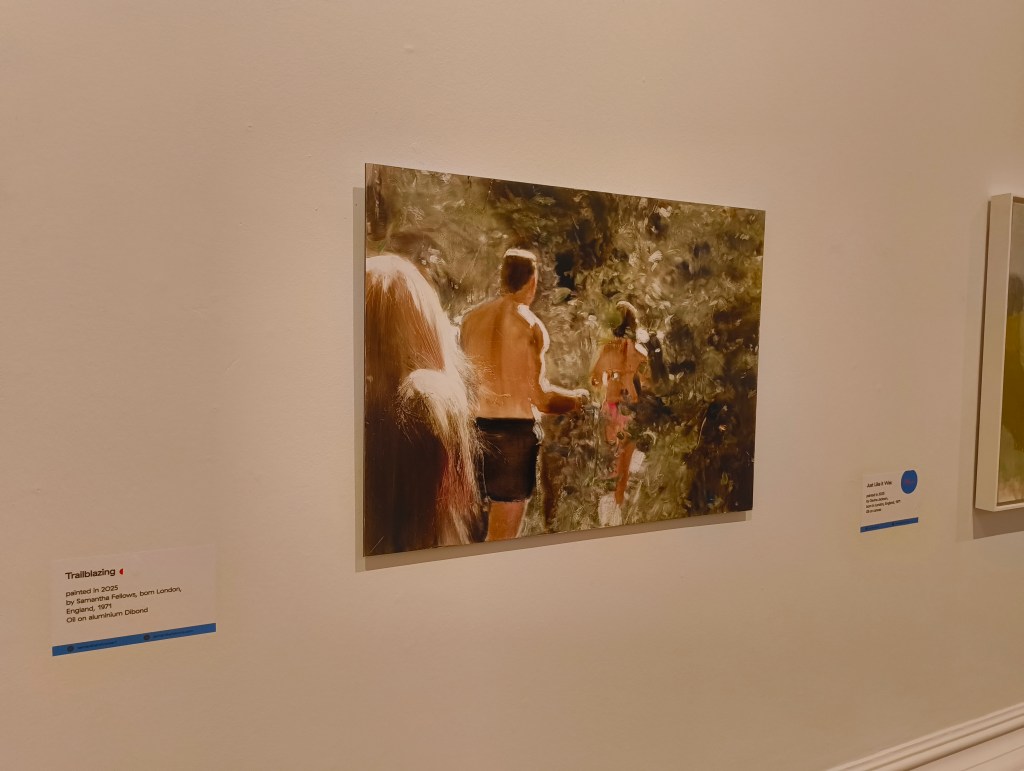
Trailblazing, by Samantha Fellows, is excellent. It captures a memory, a fleeting glimpse at a happy moment, of connection, almost too bright to hold onto. It plays with light in a manner that makes it appear almost photographic. A dud from a disposable camera. A semi-circle sticker shows that an offer has been placed.
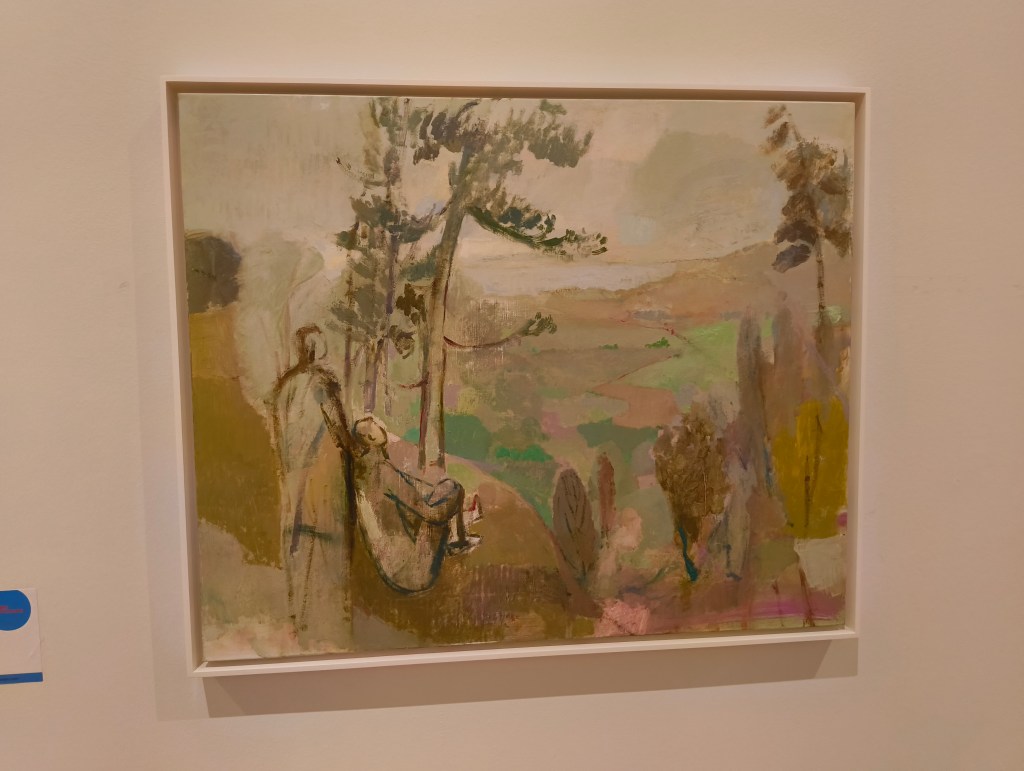
Around the exhibition are scattered Highly Commended works. The final five, as it were. Here, subjectivity comes into the fore. Just Like It Was by Davina Jackson, while an effective work, would not be my first choice for commandment, especially compared to Fellows’ work, right next to it.
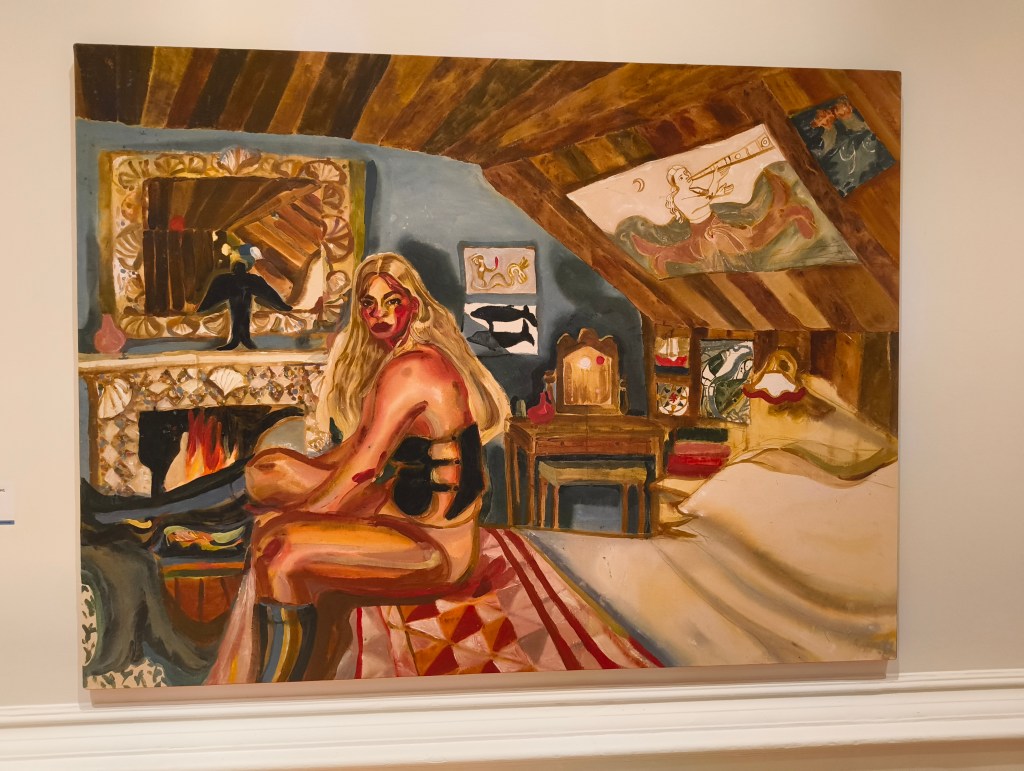
The canvases come in many shapes and sizes. A larger work that takes my eye is Thick Skinned, Quick-Finned, Always Turning Tides Tale by Rebecca Harper. There are many examples of quite painterly works. Skilful, deft in their brushstrokes, considered palettes, and compositions that remind the viewer that they are looking at a painting, not purely a facsimile of real life. There is something intimate in many works, a private view through the eyes of the artist. Many of the paintings concern people, often caught in moments that look unstaged.
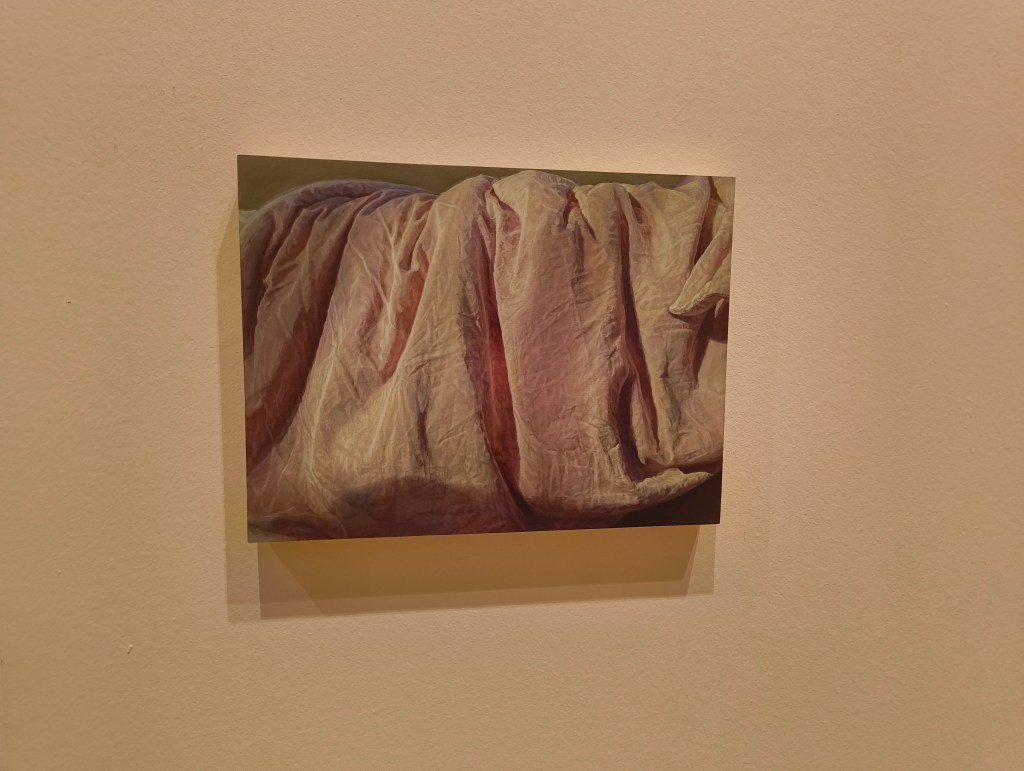
Which is why I was completely blown away by Katy Shepherd’s Bedscape2. Here, immaculate detail and skill are a necessary backdrop for an image which is so inimically suggestive that it quickly became my favourite of the entire 71. The rumpled bedsheets. Whether they speak of sex, of sleep, of the difficulty to get up, to get moving in the morning, of an inattention to the self, of a room left rotting, forgotten, while we move through our lives. It is a classic subject, the bed. We spend a lot of our lives there. So, for such attention to be placed on it, it becomes a moment of challenge in the quotidian. A small work, but remarkably powerful.
Shephard’s work is, quite rightly, highly commended.
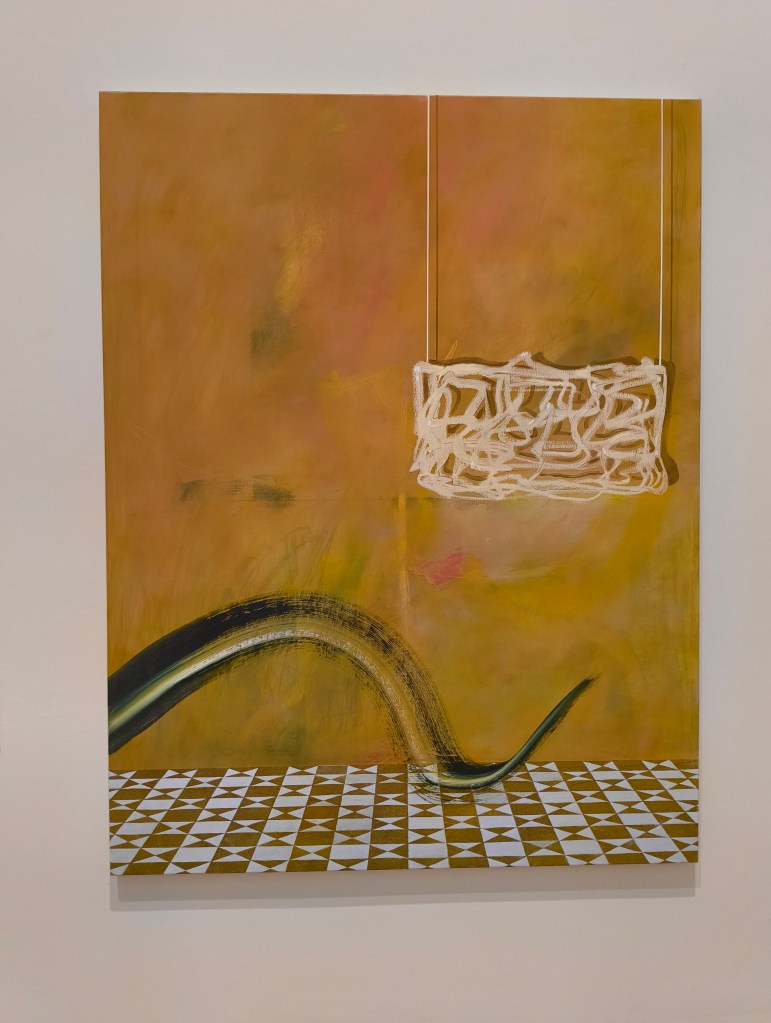
In the same room is Ally Fallon’s If You Were Certain, What Would You Do Then?. It is good, undoubtedly. It plays with different levels of abstraction. However, it is not entirely for me. Perhaps it is the palette. Perhaps it is because I have seen it before – in press releases for the announcement of the winner. Whatever the reason, I find it less compelling than a number of other exhibited works.
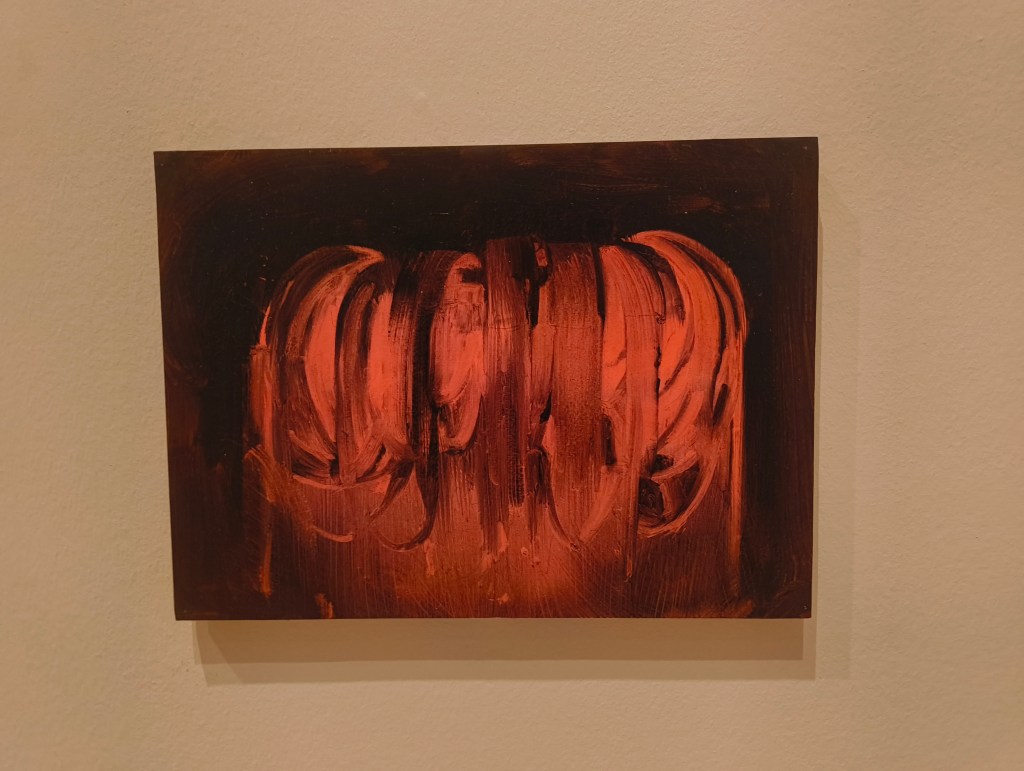
Such works include I’ve Seen Evening Light by Caroline Gorick. I have come across this work before – I think online – and it is very compelling. The replication of a fire-like glow in amongst an unknowable form creates a dissonant sense of mystery and familiarity.
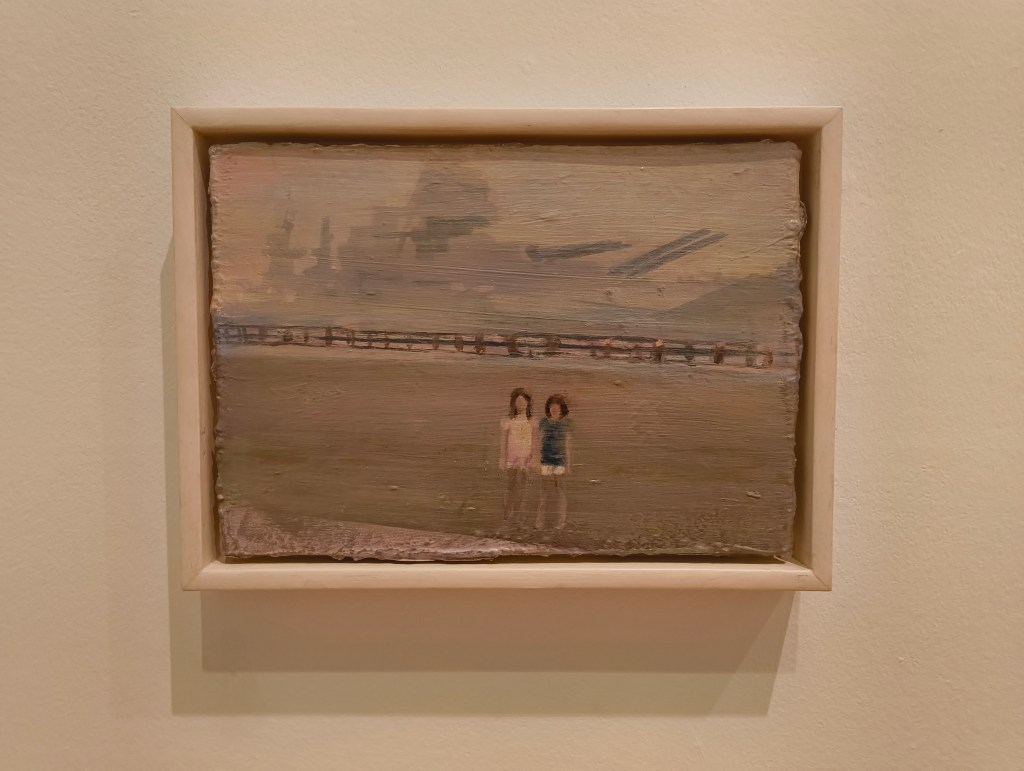
Battleship by Christina Dobbs again evokes the feeling of memory. Its contraposition of the misty, obscured war machine, and the pair of faceless figures in front tap into questions of our relationship with the things we care about and the things we create. It’s muted palette and diminutive size add to it’s almost postcard feeling. A snapshot from a holiday half-remembered. It is slightly Sean Tan
Perhaps not one of my final strong contenders, but interesting in its own right, is Deborah Grice’s Safehold (of which I failed to take an image of). Having encountered her work previously at Saul Hay gallery, it is nice to see her here also. The work has a gimmick. An ultraviolet torch, which can be borrowed from an attendant, reveals phosphorescent pigment, a magical glow emanating from within the tent. It is charming, enough so to offset its arguably gimmicky nature.
As we reach the end of the exhibition, I am definitely art-ed out. The exhibition catalogue provides a more manageable look into each painting, and the story behind it.
At the very end we are presented a grid of all of the artworks, and an invitation to vote. The winner of the Visitor’s Choice Prize will be awarded £2,025. Hilarious. I cast my vote for Shepard’s Bedscape2. It will be interesting to hear who the people ultimately choose.
Going into this exhibition in the knowledge that it is a showcase of contenders for a prize that has already been awarded is an interesting experience. Visitors are put in the mindset of the jury. Why have they awarded it to Fallon, and not any other artist? Which one is my favourite? Which one do I simply not get? It pits the artists in competition with one another. Allowing them a vote at the end only compounds this. It encourages critical viewing and personal reflection. In a way, this is quite productive. It challenges a visitor not simply to spectate art, but to question its value. Question its place on these walls. I am very glad to have visited this space and am excited to keep tabs on the artists whom through it I have discovered.
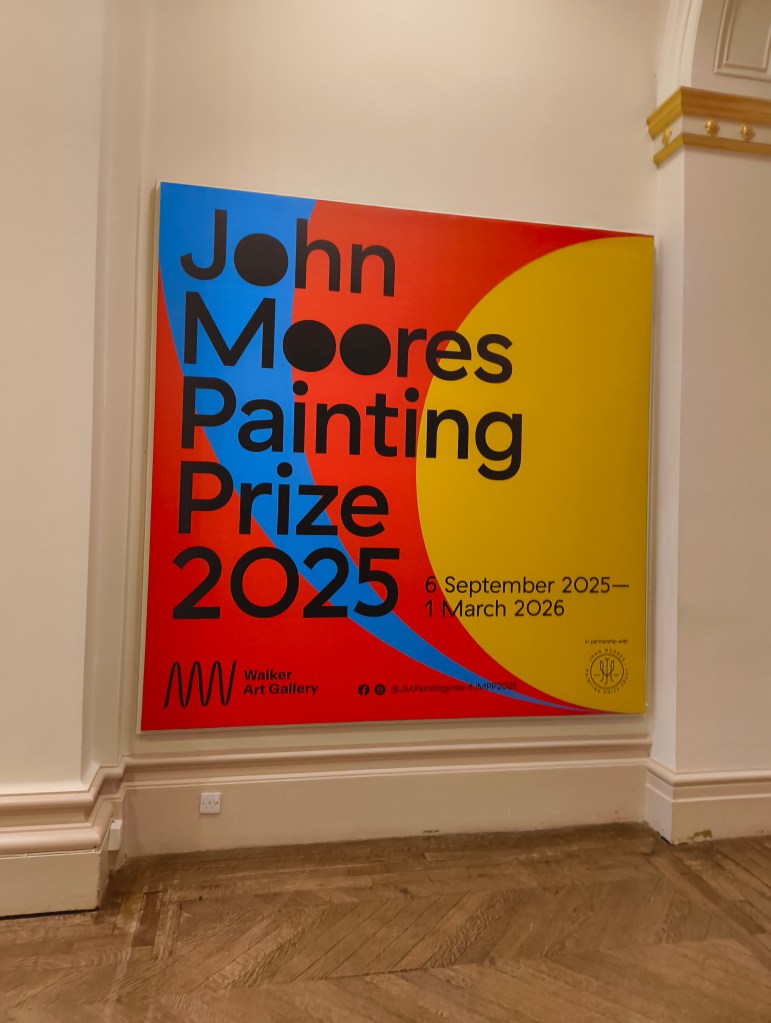
The John Moores Painting Prize is on display at The Walker Art Gallery, Liverpool, until 1 March 2026. Go and cast your vote.

 Caleb
Caleb 
Leave a comment