Let’s call it a sabbatical.
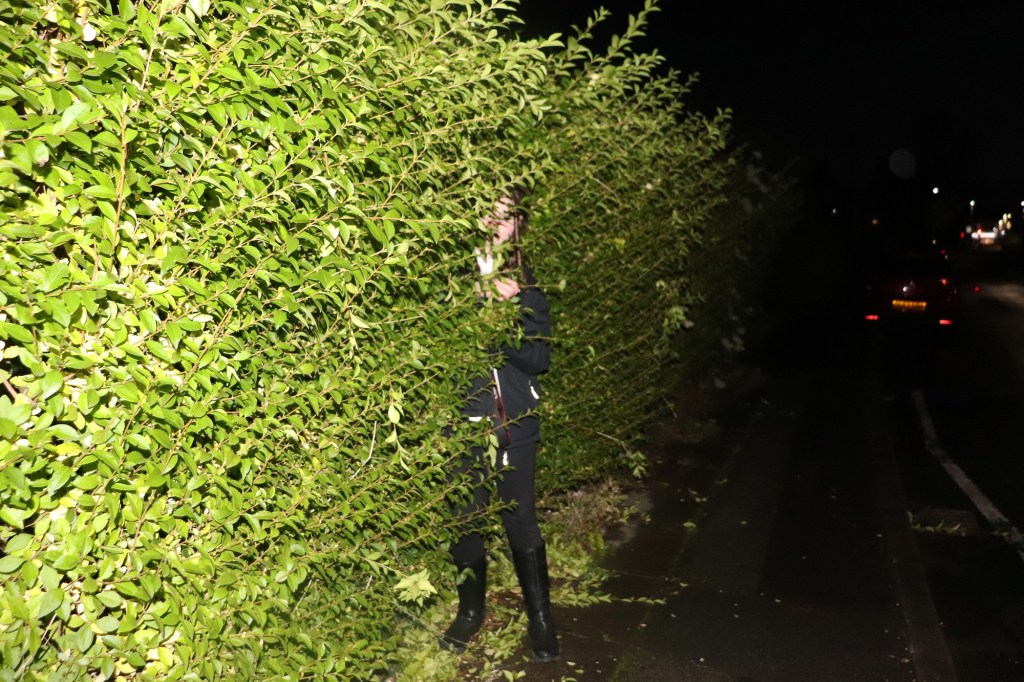
I’m in Liverpool, visiting friends. My future is up in the air and I haven’t yet had breakfast. A cursory glance tells me that Tate Liverpool is closed for refurbishment and it’s temporary location – hosted by RIBA North – is also out of action. Well, it’s shop is open, but the gallery space is closed. An Ed Ruscha exhibition is due to open on February 12th. I am a week too early.
Next door is Open Eye Gallery. A dedicated photography gallery and a nice respite from the winter winds. Big Thief is playing over the speakers – a tasteful volume and an indicator that I am the target audience for this space. A much needed moment of belonging.
On display – until March 29 – is the Look Climate Lab 2026. A handful of projects – each bearing photographic fruits – concerning the intersection between the environment, climate science, and photography. Each spoke of this wheel is interesting in its own right. Some of the more visually inspiring projects take the spotlight. Yet, as a whole, this is a considered, engaging, and contemplative exhibition.
Tucked around a corner is ‘Seeds of Change’ – an urban development project for Salford Uni’s Peel Campus – my doorstep. It is presented as an architectural concept, with audience participation voting for the nuances. It’s relation to photography is unclear, but it is an interesting set of blueprints at the very least.
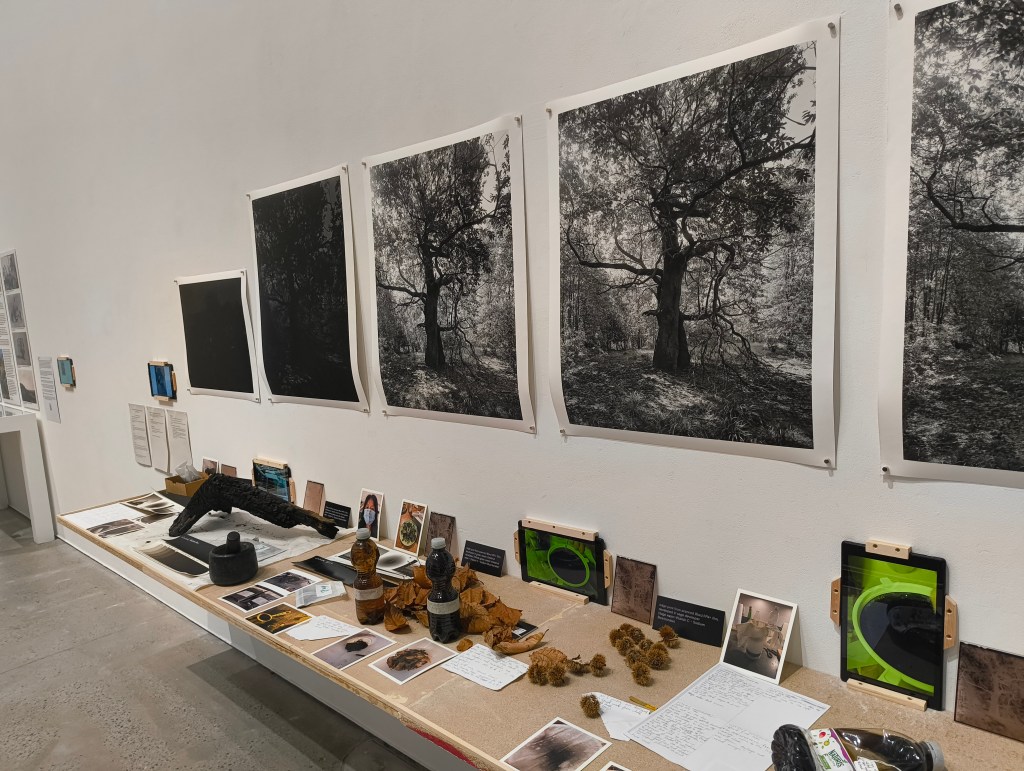
‘Offshoot: Memory Keepers’ is the result of Yan Wang Preston’s residency at RHS Garden Bridgewater. A compelling array of photographic prints, an assortment of bottles and botanical offcuts are laid on a bench. They are plant-based developers – different prints are achieved through different natural chemical processes. While the prints are of varying successes, the entire display is excellent. It centres the age and gravitas of the central tree and taps into the intersection between nature and science from a particularly photographic angle. The Chestnut Tree – subject of the photographic prints – is estimated to be 300 years old. Preston uses the stunning phrase: ‘Contemplation of Deep Time’
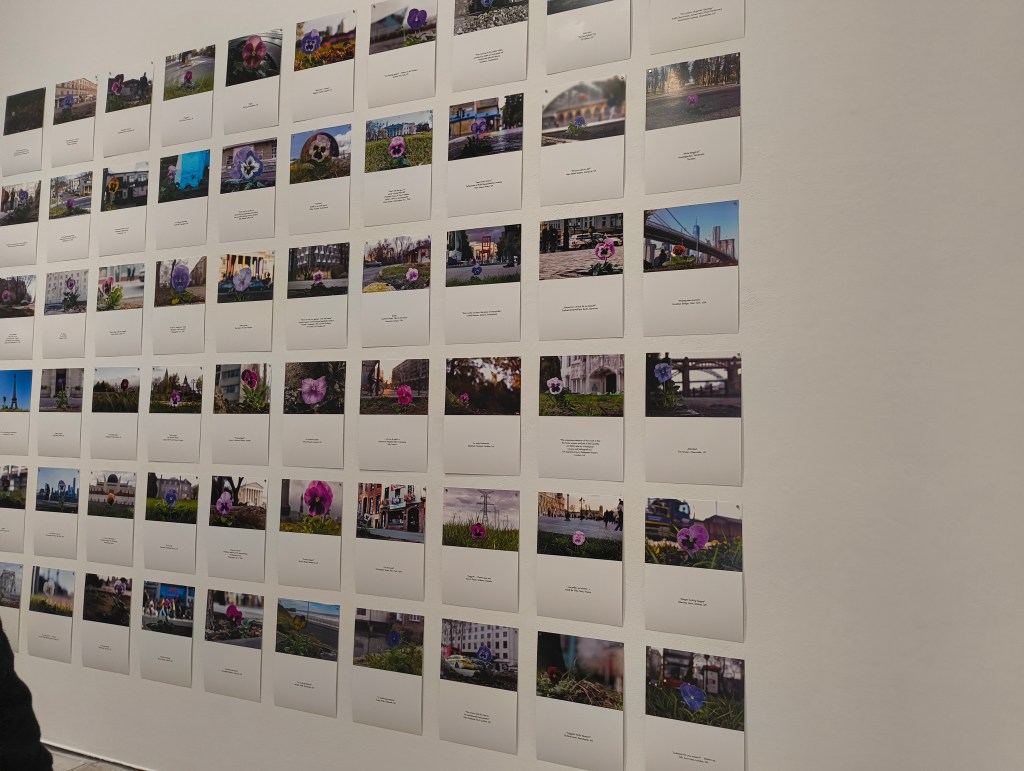
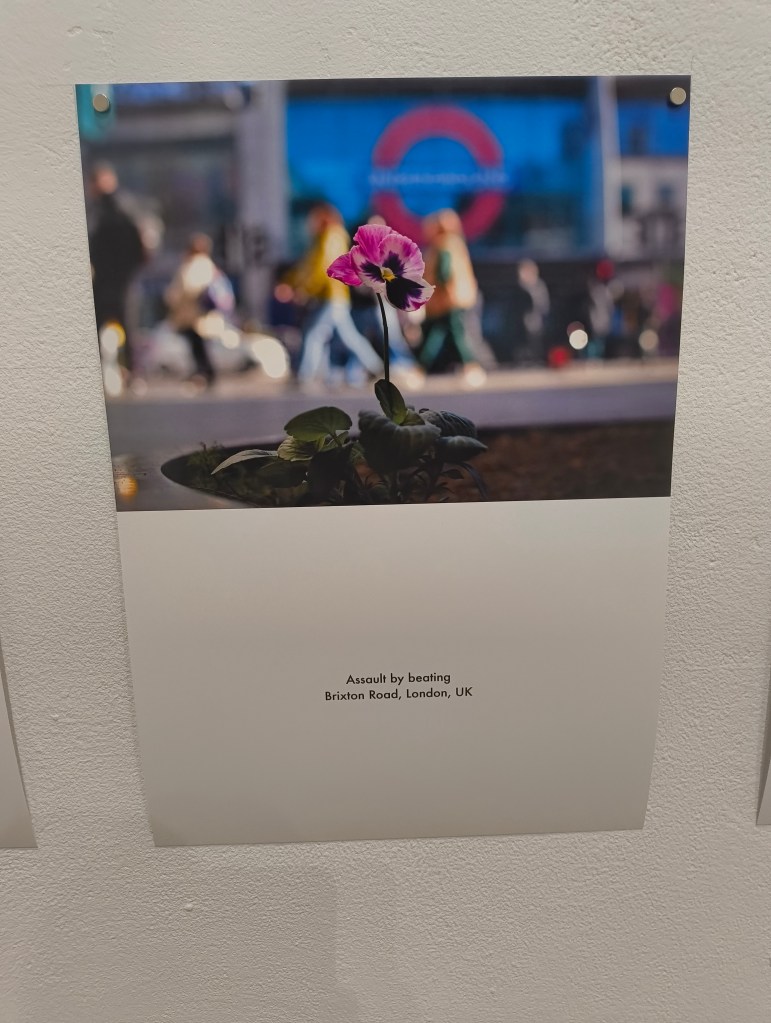
At the far wall of the first gallery is an attention grabbing grid of photographs. Each depicts a flower, sprouting in a variety of urban environments. The Pansy Project, started by Paul Harfleet in Manchester, 2005, is highly impactful. Each photograph is titled with an instance of verbal or physical homophobic abuse. The flowers reinterpolate the violence, and turn it into a symbol of resistance. Specifically urban and uncompromisingly international. An accompanying booklet plots out the locations worldwide. It is an eye-grabbing display – its impact increasing upon realisation that the 60 photographs are only a fifth of the overall project.
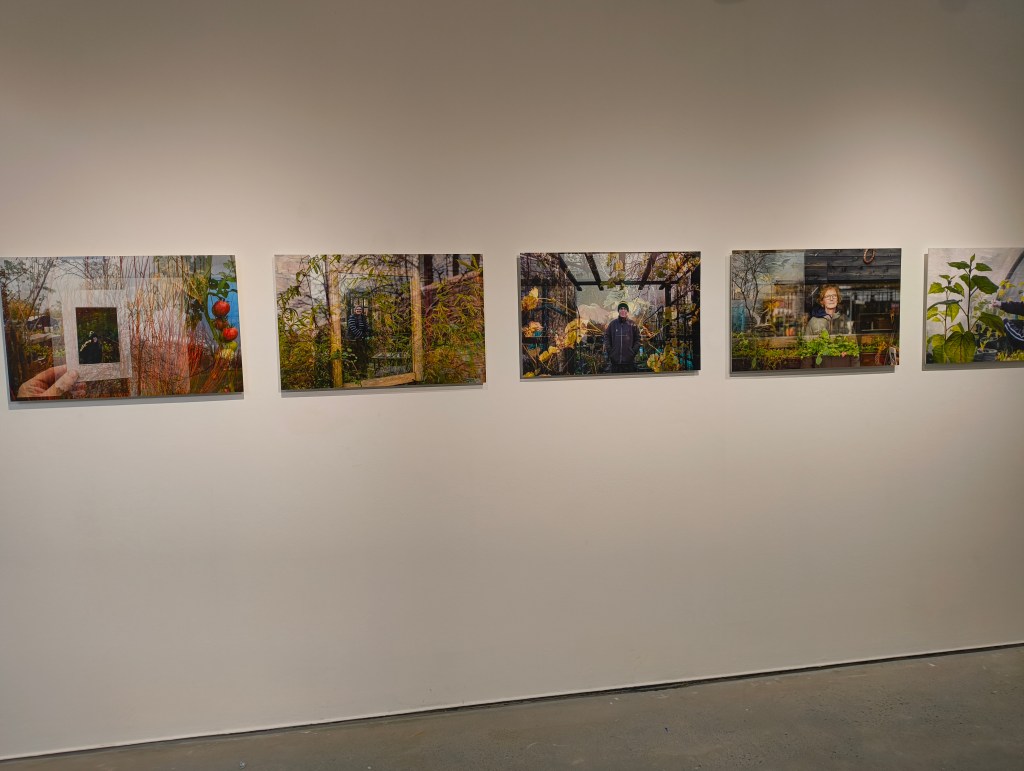
The second room presents an array of community group. My eye is drawn to the multiple-exposure works of Stephanie Wynne. In a text panel, the subjects – gardeners – are each accredited. In the corner there is a collage station. Two people are using it, engrossed in their own art.
The third gallery, up an overilluminated staircase, has an immutable atmosphere. It is unmistakeably evocative of a well-funded community space – like a newly developed extention to a scout hut. Something in the smell and the lighting. And, of course, the content.
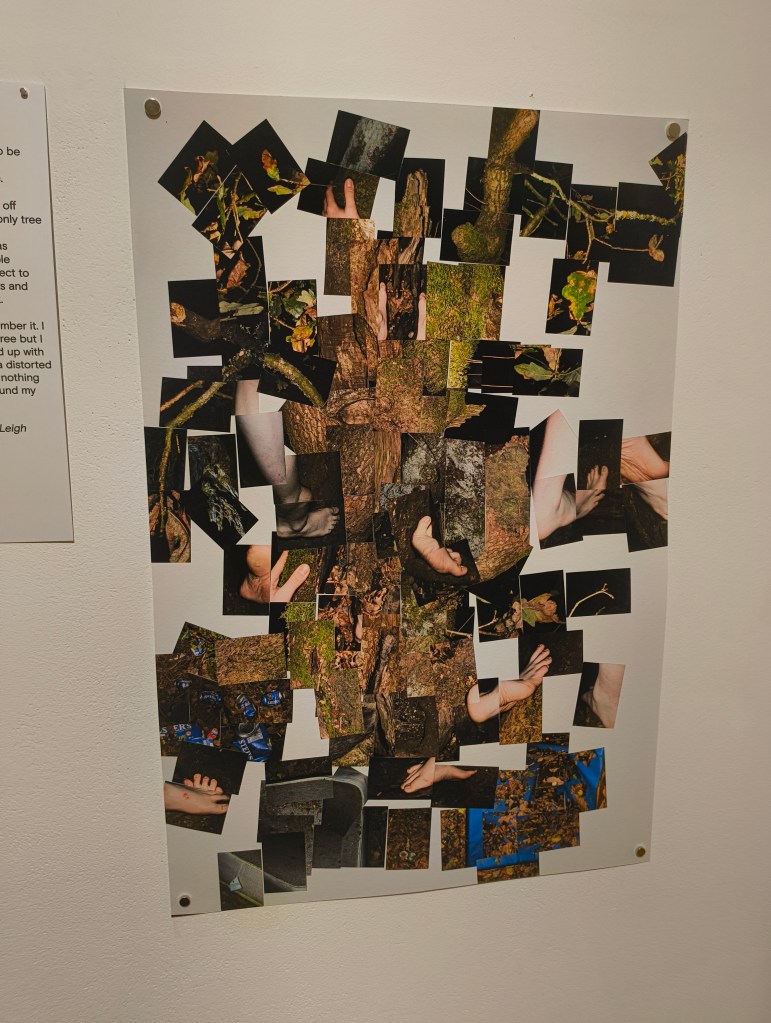
I am looking at the output of TreeStory Wigan. Photographs of trees, each accompanied by poetry or prose. A post-industrial picture, centring trees as a point of connection, of memory. It is very personal and very keenly collaborative. The words and images are so authentic it is almost painful. I stop and read a poem by ‘a young person from Global Friends’
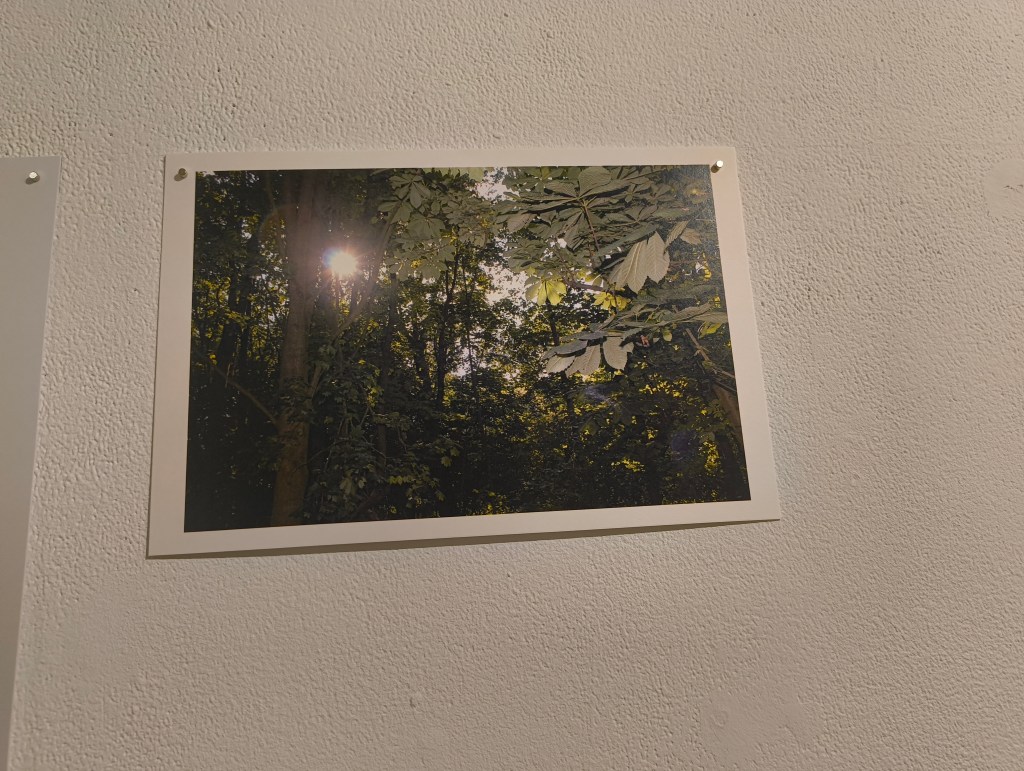
In the verdant
Woods where sunlight
Barely steams. A symphony
Of sounds, a world of dreams
And joy and no rules.
It makes me cry a little.
Aggressively simple, with the bizarre use of ‘steams’ in place of, presumably, ‘streams’. Yet it is so evocative, alongside its accompanying image. The grounding force of nature leaps out of this project and reminds me of better days.
Putting aside the emotional connection I uncovered between myself and the concept of the tree, this exhibition is a lovely collection of thoughtful projects. Each is community minded, and while some have more engaging outputs than others, as a whole Look Climate Lab 2026 is an engaging, restful, and contempletive experience. I am very glad I chanced upon it.
Look Climate Lab 2026 is on display at Open Eye Gallery until 29 March 2026, and is free to enter.

 Caleb
Caleb 
Leave a comment