Anti-Isto Manifesto-poema
MNAC
(Authors note: through a combination of fatigue and enthusiasm, many of the images of this exhibition take the form of post-post-ironic selfies. Apologies in advance.)
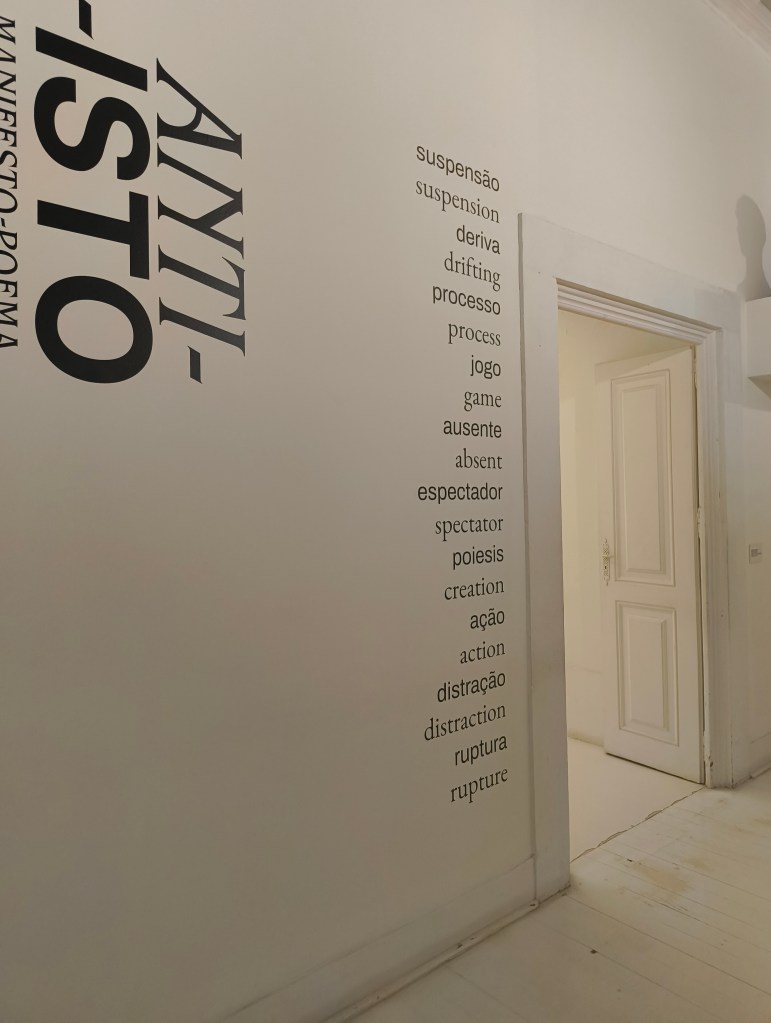
If ever there was an exhibition designed specifically for me, this would be it.
I have arrived in Lisbon. The sun is strong and I have been weaving through the side streets, dipping in and out of the shade. I notice that the route to my next hostel takes me right past the Museu Nacional de Arte Contemporanea (MNAC). This relatively unassuming building belies its size, using its verticality to bring visitors upwards on a chronological journey through Portuguese art. At its summit, temporary exhibition space.
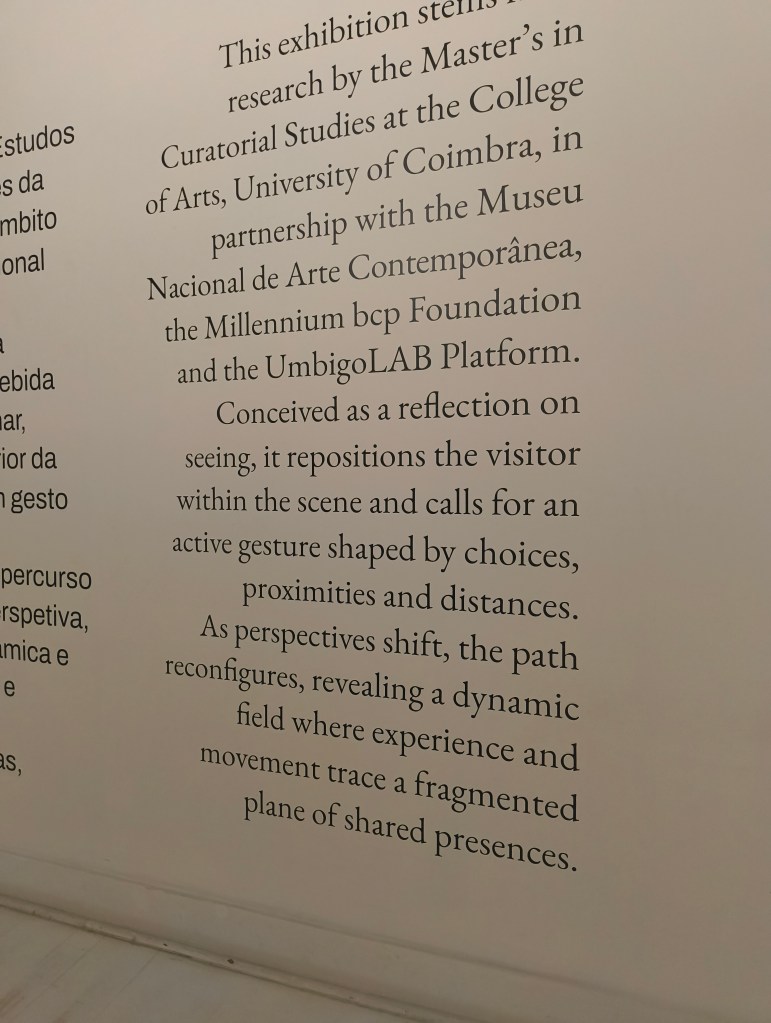
While MNAC’s permanent collection is quite remarkable, and pleasingly structured, I shall save it for a separate post. Instead, up in the rafters, as the floor turns to wooden planks, I find an incredible curatorial experiment – Anti-Isto.
A group exhibition, curated during a curatorial residency as part of the Master’s program in Curatorial Studies at the Universidade de Coimbra, this exhibition shines a blinding light on the role of the viewer and the dual acts of perception and participation in gallery space. Every decision deepens and develops their theme in a pointedly engaging manner.
The distinction between ‘seer’ and ‘seen’ is constantly disrupted, transforming the viewer into an active participant and activator. Sight lines are extended and disrupted. Pathways are varied and vital. Agency shifts between visitor and artwork.
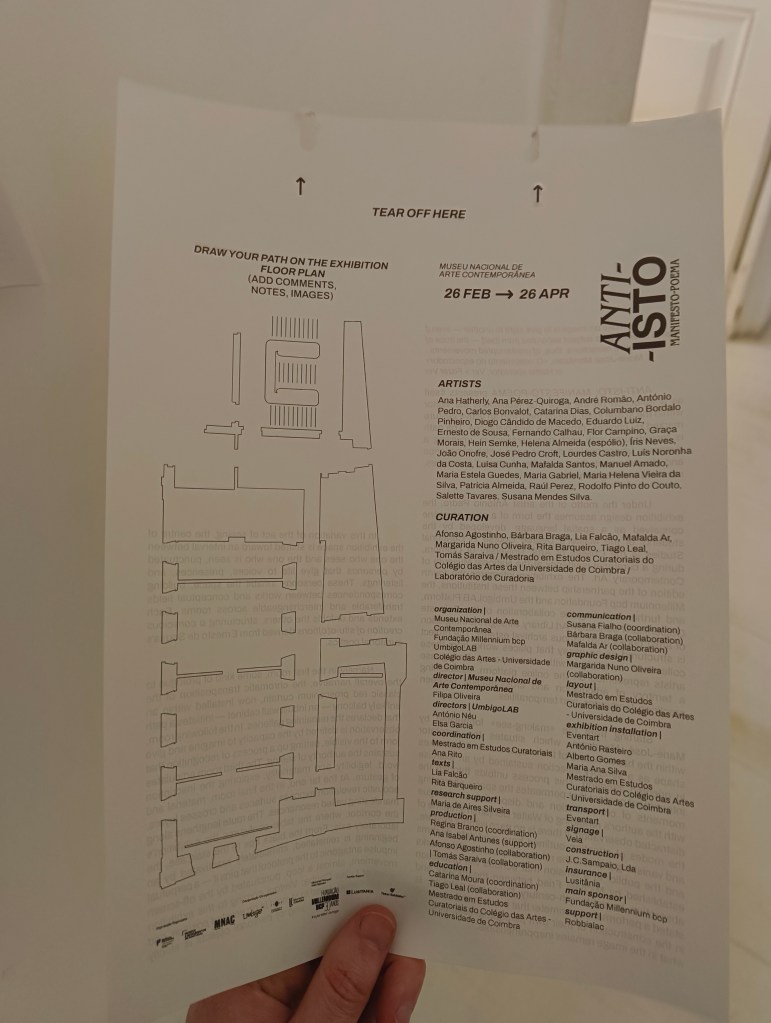
The first mark of genius comes in the form of the exhibition handout. We are presented with a map, unmarked but for the walls and physical boundaries of the space. Through this, we are subtly informed that the museum space exists in the voids between these impermeable marks. Its contents are protean, waiting for the visitor to mark them, bring them into being. We are expressly commanded to ‘Draw Your Path On The Exhibition Floor Plan (add comments, notes, images)’.
This ties in neatly with my own understandings of the interlinkages of cartography and the production of museum space. We are given an opportunity to codify, iconise and solidify our understanding of space into cartographic form. Without a map to guide us, we enter an undefined space. Once we make our marks, we act to define it, stripping extraneous and alternative understandings, upholding our own cartographic pedestal. I would love to see as many of these completed maps as possible. To compare and contrast peoples journeys through gallery space, and their symbolic reproduction of it, would be very valuable.
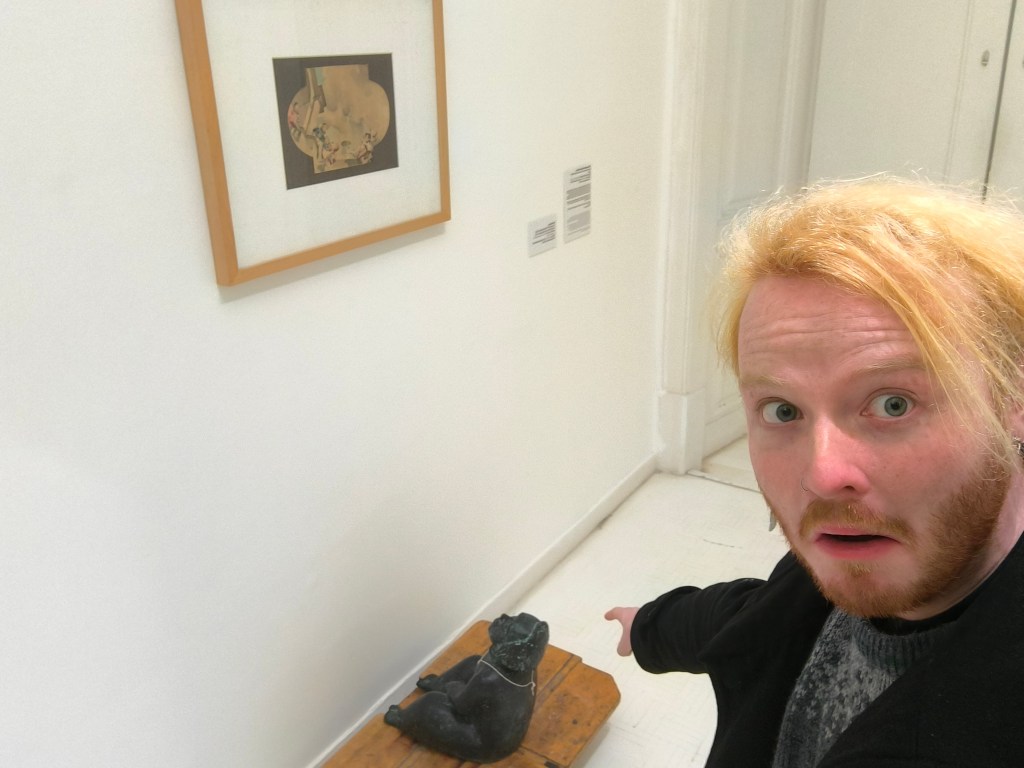
The space itself is cyclical, with the placement of wall text and hand-outs suggesting the direction of travel. As the visitor progresses through this circle, different disruptions are found, and different aspects of perception come to light.
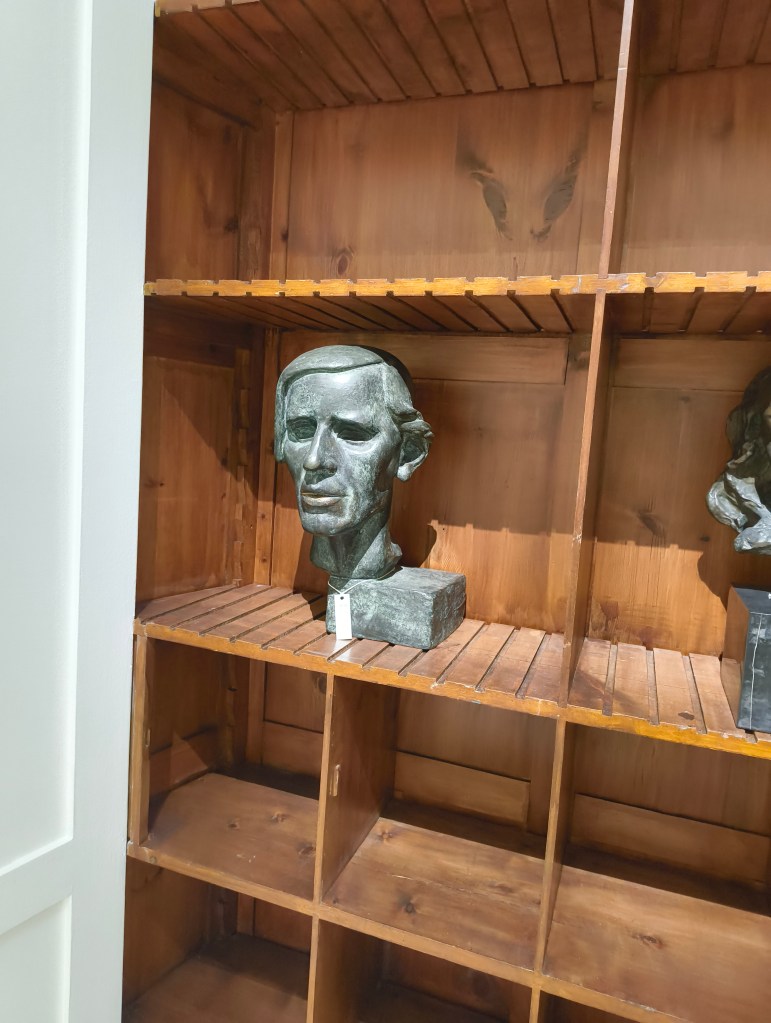
We notice the sculptural busts. Devoid of eyes, they re-affirm our power to see. With the power to see, the power to understand and define. Yet, here, we remain unseen. A cherubic sculpture sits on the floor. Presented not as artwork but as attendant. These forms – representations of the viewer who cannot themselves view – are understood by the curators as personas. They accompany us on our visit, suggesting manners of unconventional viewing. They look from above, or from out of alcoves. We are placed in a dual state of viewer and viewed.
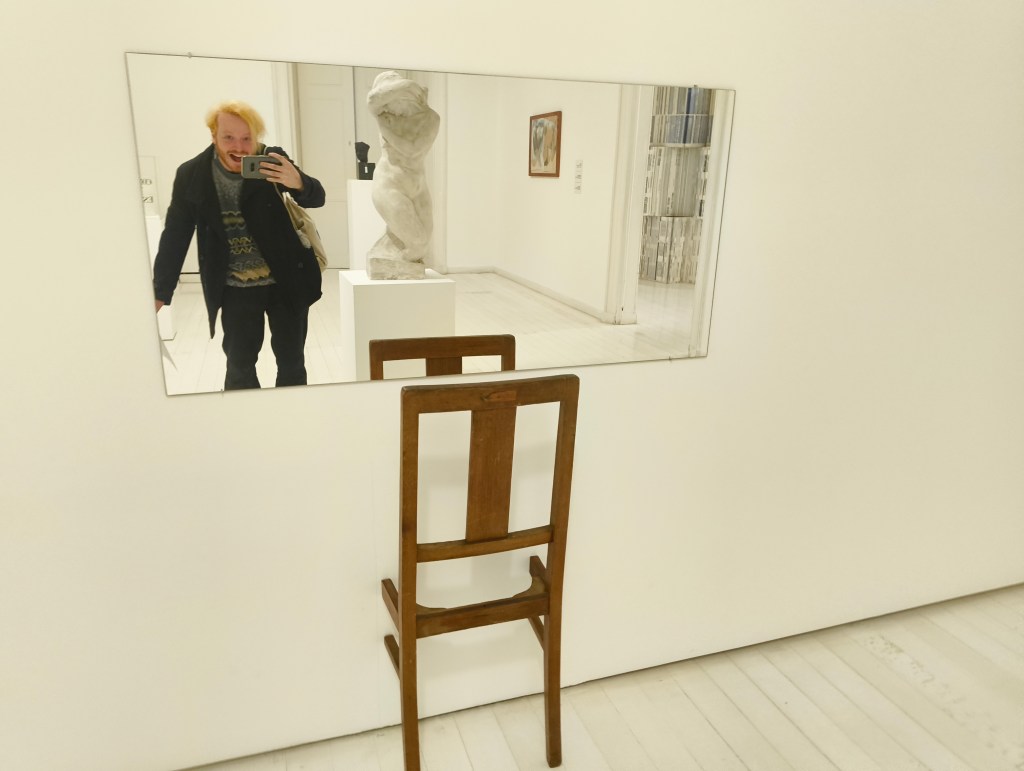
Further along, the degree of reality comes into question. A mirror, placed with a wonderful sculpture of half a chair – itself undermining the physical boundaries dictated by the map – reflects a marble sculpture. We see ourselves. We see the sculpture. The sculpture sees us. The sculpture sees itself. We see the reflection of the sculpture. The sculpture sees our reflection. The personas, still visible through the large open doorways, see the whole scene.
The chair invites us to see beyond the reflection, back into the room. Other artworks can be viewed, yet the action of viewing becomes repeated, mirrored. We actively choose to see, we are an agent. Is our reflection? By observing the artwork through the lens of the mirror, are we moving away from authenticity? And, in that case, do the artworks persist as artworks without our observation? Is the act of seeing an act of creation?
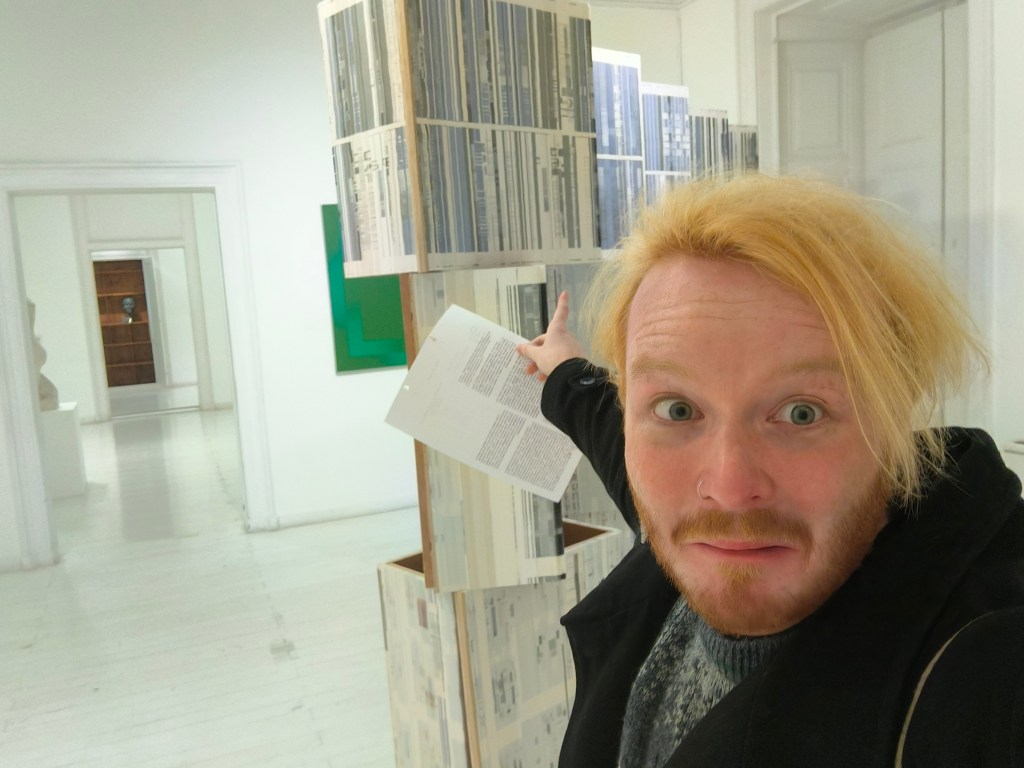
I weave between the artworks, pausing at some, moving to others. I move as feels natural – following both curiosity and the pull of empty space. In one room, a dividing wall appears. At first glance it is made up of text. In actuality, it mimics the form of newspapers, yet carries no language. If it were words, it could ground the experience. Remove me from the spatiality and take me to a realm of constructed, presented understanding. Instead, it partially disrupts the space.
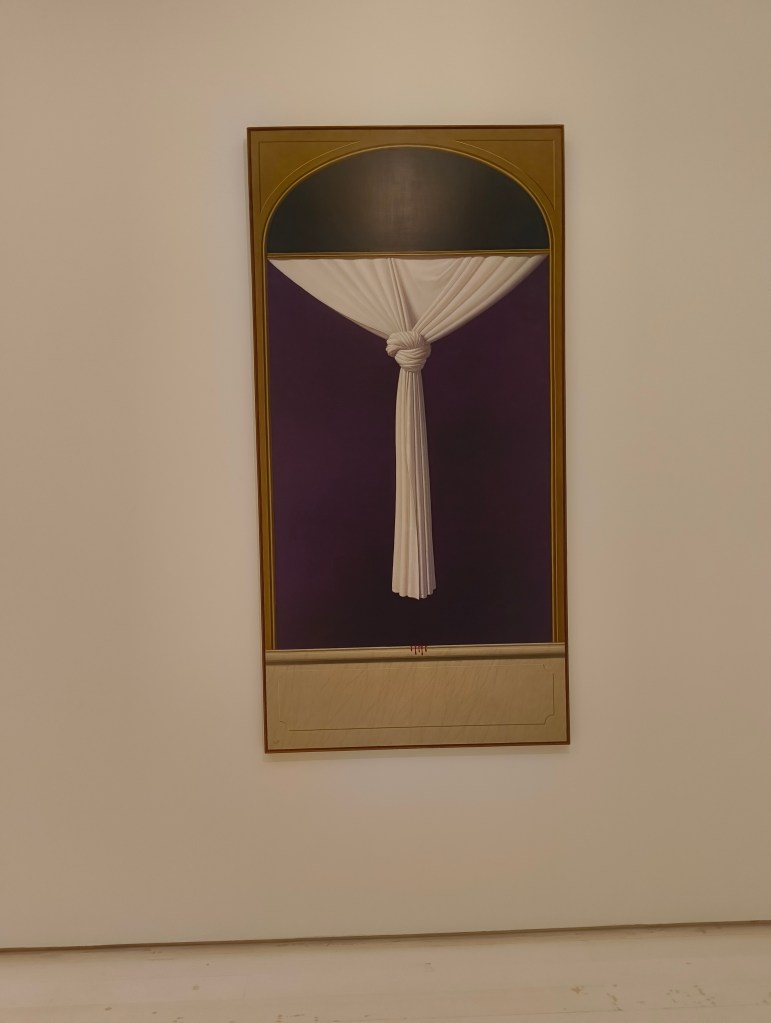
One persona, sunk into a cabinet in the first room, maintains a line of sight throughout the evolving gallery space. It is focused on a painting at the far end. A curtain, bunched and tied in the middle. An engagement with the surreal. An extension of this visible axis – further than the physical confines of the gallery. The persona, and the visitor, can see further than the available space.
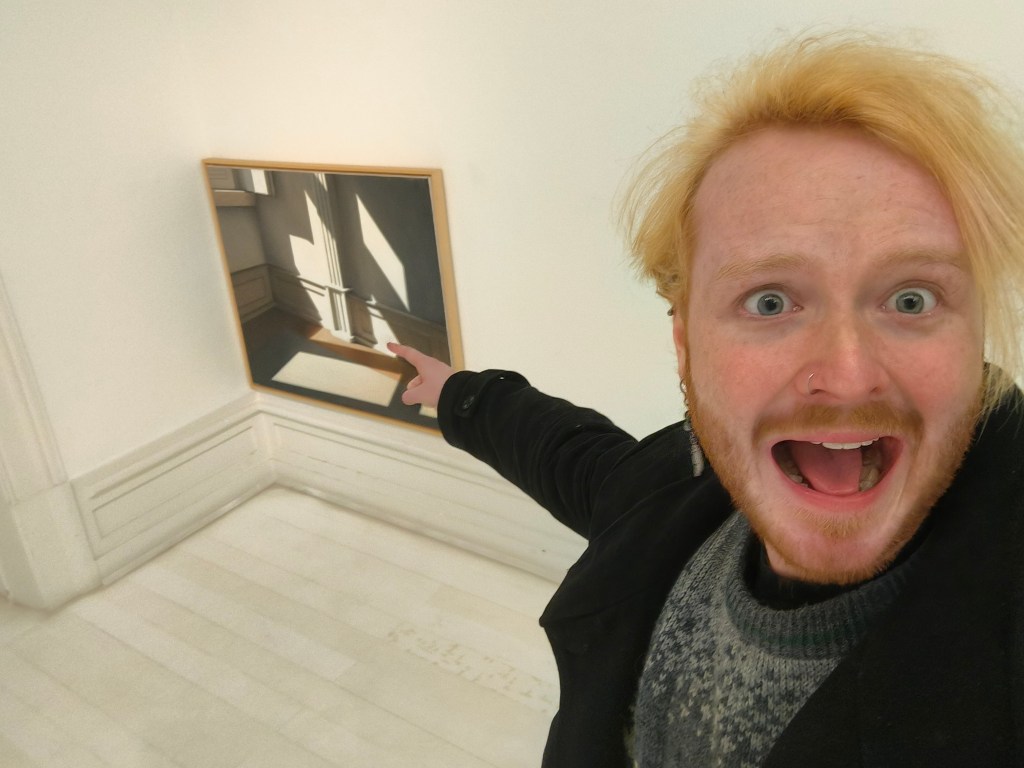
This final room explores a sense of materiality. Here, there is no mirror to create further space in which to view. Instead, images of architecture, imagined spaces, extend the gallery further. They are encountered through our perception. When perceived, the space extends. Placed at unconventional heights, they distort the physical space in which we are stood, metamorphising it into a wider conceptual space. The painting of a curtain disrupts the cyclical layout of the exhibition, suggesting a linear progression, if only we could step through it.
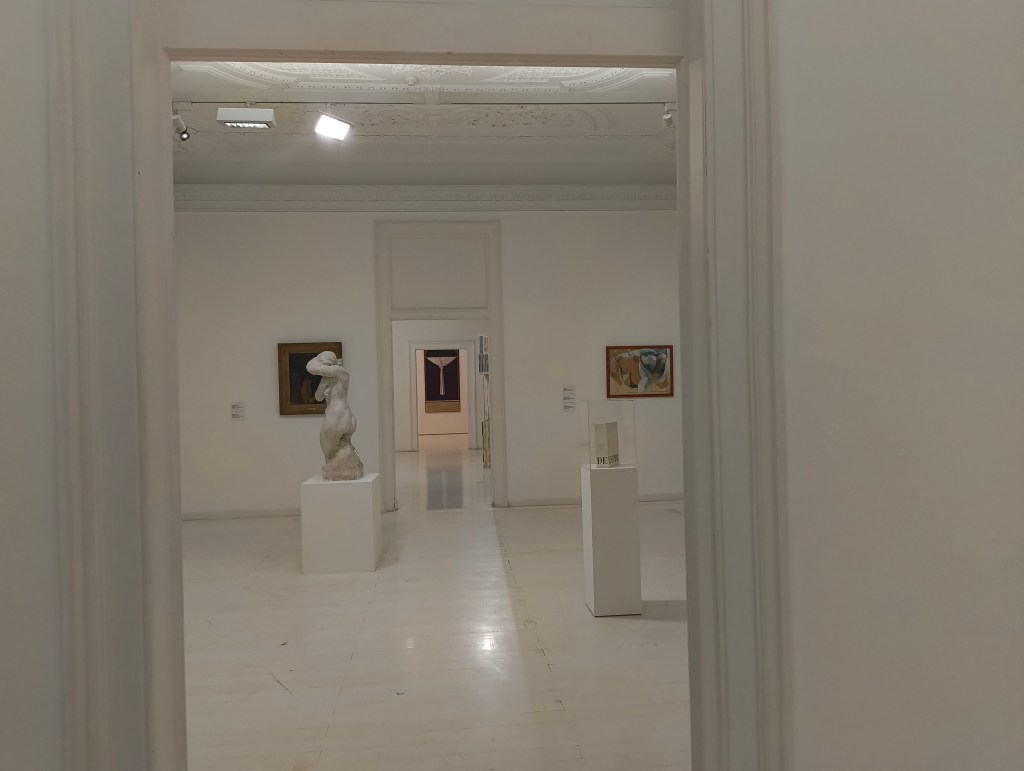
Oblique descriptions aside – for my notes and photographs are patchy – this is an incredible space. The way in which the curators have worked with the antiquated building, its odd door-frames, vaulted ceilings, and strange layout, is very clever. The choice of artworks is fascinating. Each speaking to a different dimension of what it means to perceive and be perceived. More than this, the placement of the artworks is genius. The potential routes are endless. A web, a multi-directional assemblage of artworks, building, and visitor.
Simple gestures such as walking between artworks become layered with meaning and significance. Time and space become interwoven as the visitor – an agent – activates the exhibition.
The question of perception, and a viewers relation with the viewed, will always be interesting to me. This is the kind of exhibition that I could stay in for hours. To witness others and their own personal pathways would be fascinating.
On display until 26 April 2026, I would highly recommend anyone in Lisbon to visit MNAC for this exhibition alone.

 Caleb
Caleb 
Leave a comment