This tranquil experience offers both a reflective space to encounter nature and an insightful look into Edo period Japan. The curators manage to draw our eye, highlighting details and insights in the artworks, yet never forcing an interpretation or overwhelming us. The beauty of nature, and the resilience of people, shine through this beautiful display of prints. Despite its unchallenging nature, it is a well balanced and informative exhibition.
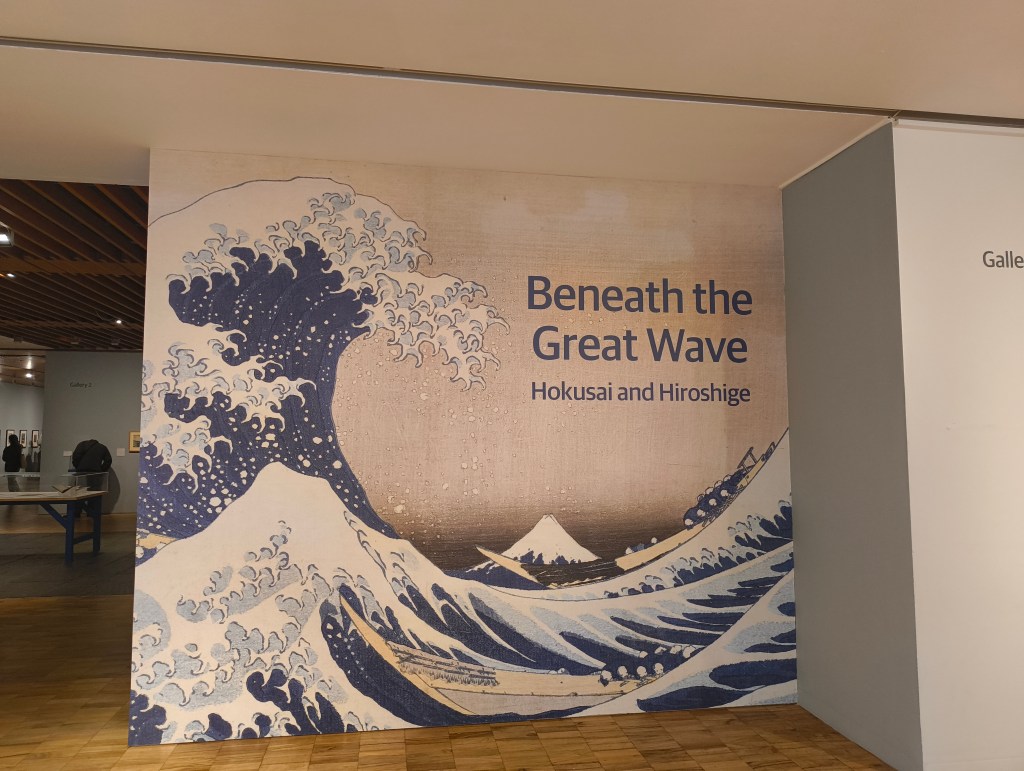
It is a Friday, around 2pm, and The Whitworth is reasonably busy. This exhibition, having opened on March 14th, continues to draw interest and footfall. More so, many visitors are spending considered time with the artwork. There is a sense of deep engagement. The exhibition facilitates this.
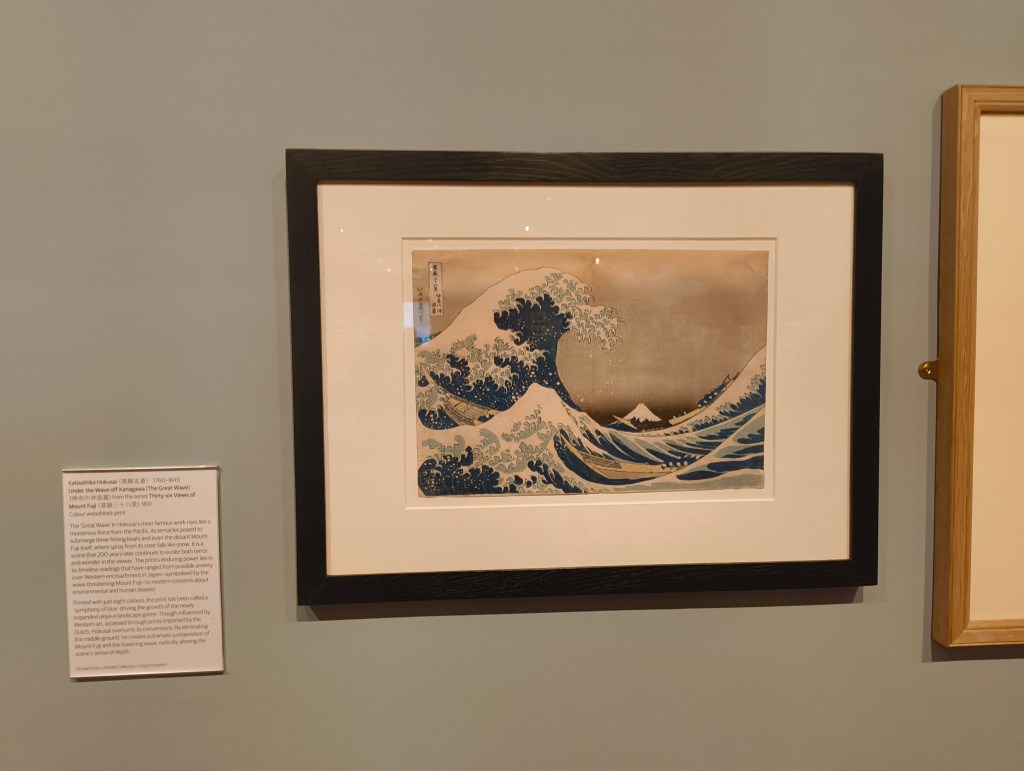
Iconic as it is, Hokusai’s Great Wave provides enough draw to share its spotlight with each and every artwork here. It is, naturally, in one’s sight line upon entering the gallery. Besides this, however, it is not given any sort of pedestal. In fact, it becomes an inflection point. A second Great Wave is displayed not far away from the first. Accompanying text explores the production and later scarcity of this artwork. From around 8,000 originally produced, 100 or so remain. A pair of visitors are comparing details, noting the subtle differences left by the printing process. It is – in part due to its celebrity status – an incredible artwork. Its simplicity belies its power. A great sense of roiling motion is captured in the shades of blue and white. You can’t be mad at its fame.
I turn, and am greeted with one of only four sections of exhibition text. There is no pronounced demarcation of spaces, and a high artwork to text ratio. The introductory text neatly sets up the context of the Edo Period, laying a groundwork for an explosion of ukiyo-e artwork during a time of prosperity.
“Beneath The Great Wave transports visitors to Edo, a city on the brink of rapid change and modernisation”
We are indirectly informed of the two goals of this exhibition. Firstly, diving into the content of the prints – connecting with the landscapes and seascapes. Secondly, to look into the past, and build up our understanding of 17th-19th C Japan.
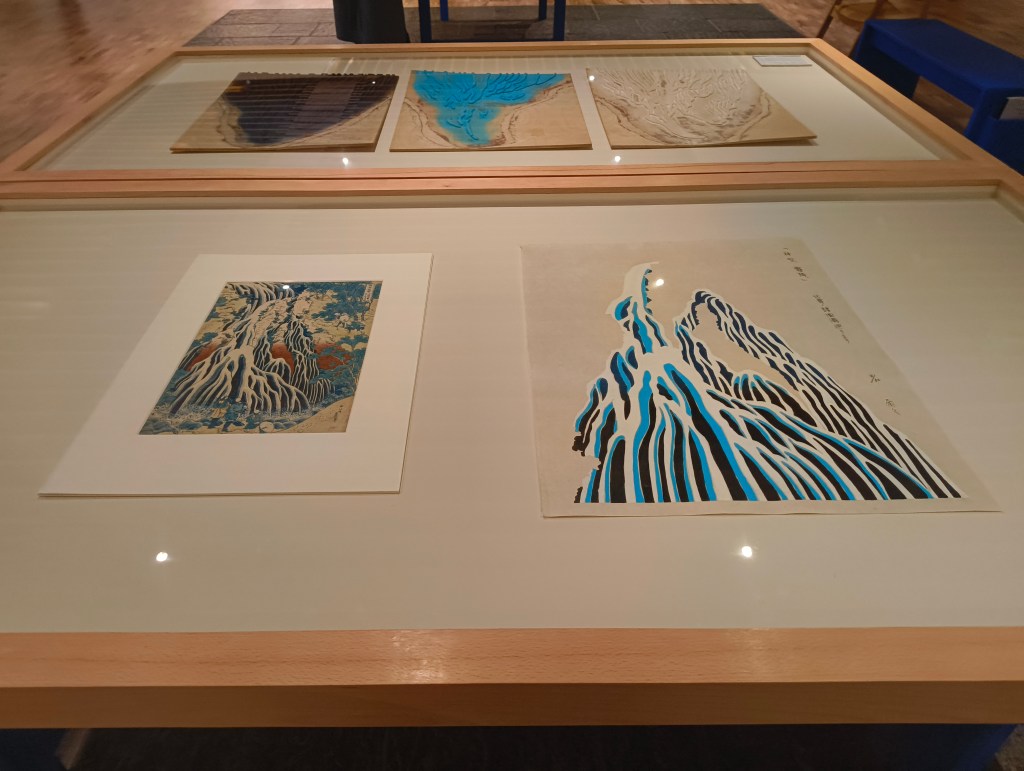
We see – through the inclusion of woodblock prints by Nana Shiomi – the influence of ukiyo-e artwork on subsequent generations. This theme is brought up frequently, and many a mention is made on its influence on Western Art. Notably, no Western Art is on display. I think this is a sensible move, as it removes the risk of decentering Hokusai and Hiroshige’s art.
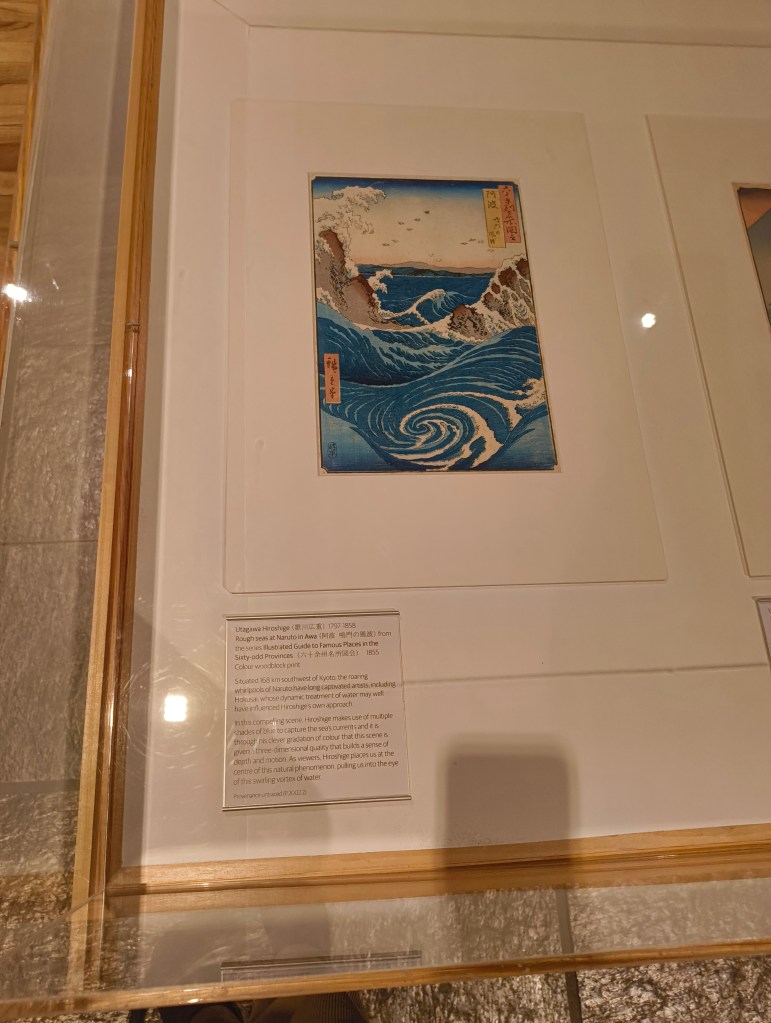
A section of text poses an interesting question; “why do these mass-produced, once ephemeral prints retain such power for contemporary audiences?”. While the exhibition doesn’t offer a comprehensive history, it includes enough hints to allow a visitor to explore this question. The text goes on to suggest a couple answers – the strong visual storytelling, and the timeless theme of the relationship between humankind and nature.
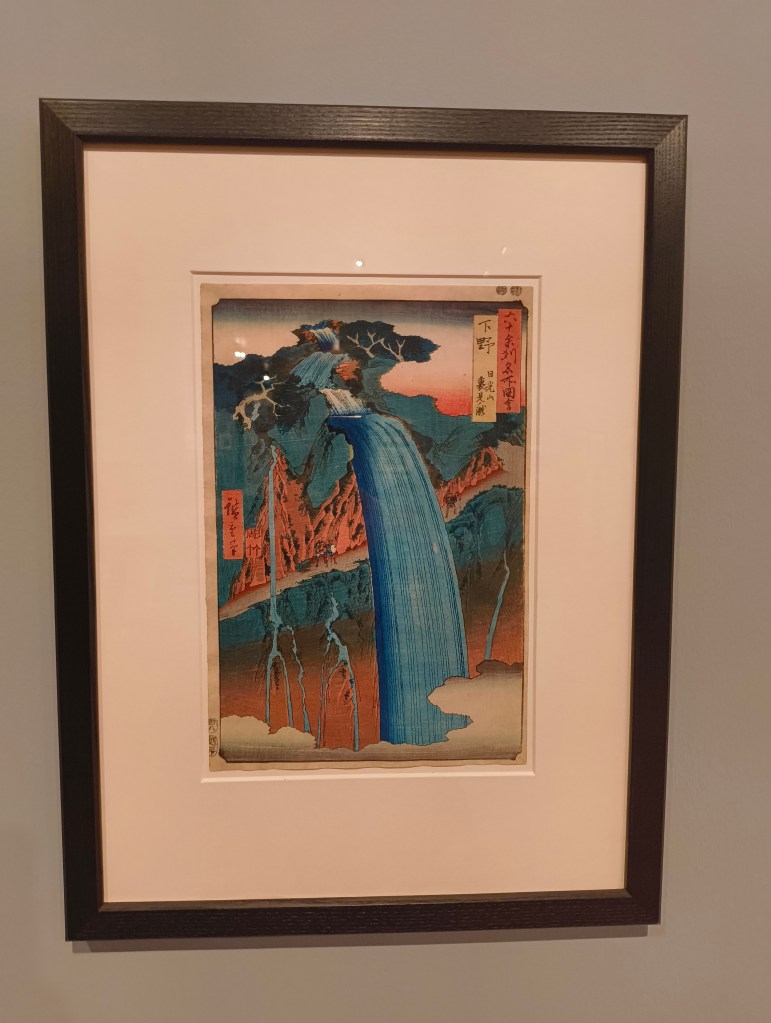
One wall focuses on Hiroshige’s vertical prints. They are beautiful. One artwork’s description references another piece, creating a nice journey. Other artworks are presented with only provenance, without description. This is a good move. We can engage with the artwork, its content and stylings, on our own. It allows one to spend genuine time with the image, rather than cross checking the text with the artwork.
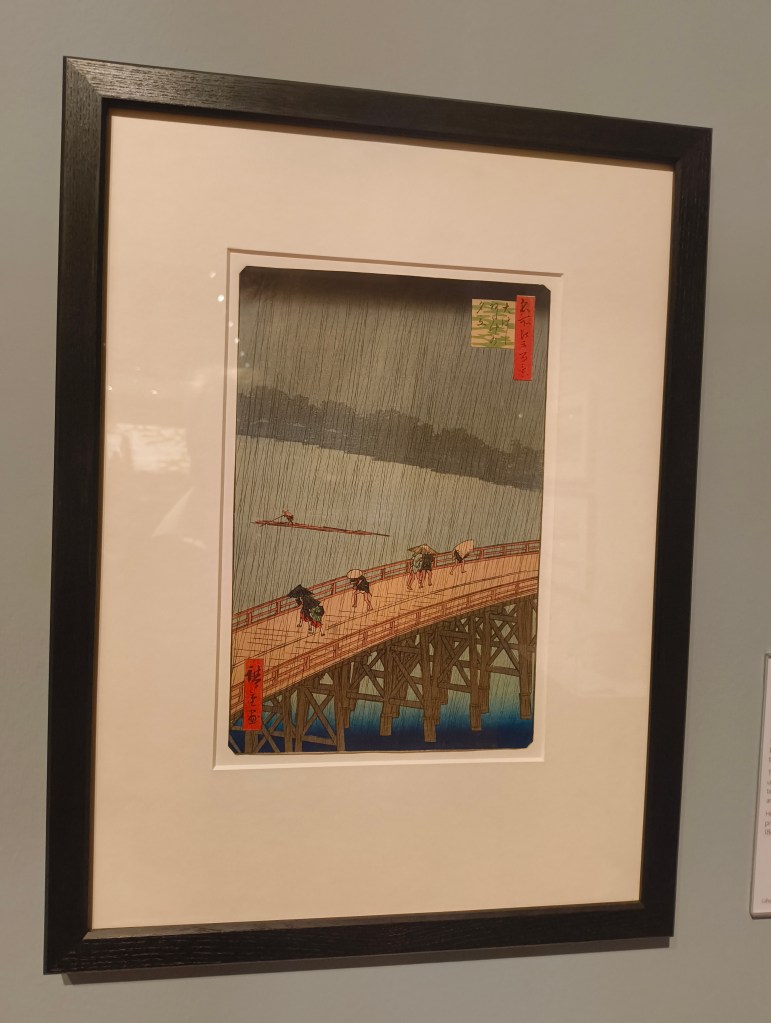
Another wall pairs Hiroshige and Hokusai’s interpretations of the same locations. In an engaging display, we can see multiple perspectives and – in some sense – come to a better understanding of each artist’s approach. The images of Shin Oshani Bridge are particularly evocative. Having grown up on the films of Hayao Miyazaki, the depiction of diagonal, driving rain is immediately familiar. The odd comfort of being inside during a raging storm.
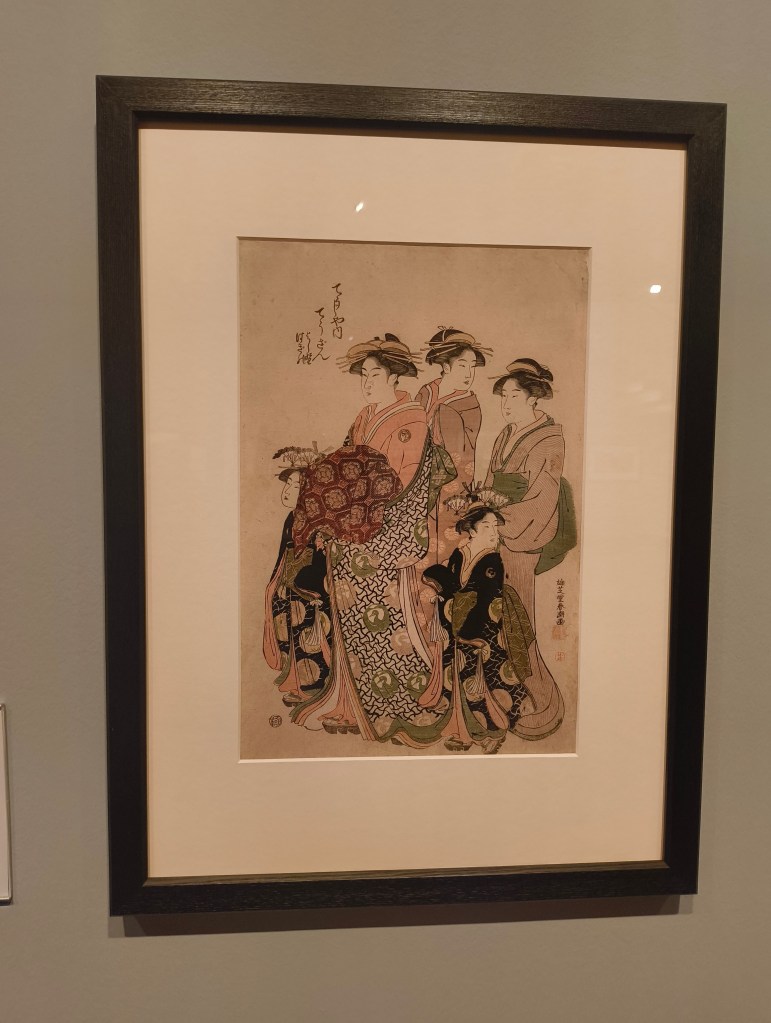
The second half of the exhibition shifts the focus from nature to the people who inhabit it. Drawing from a wider pool of artists than just Hiroshige and Hokusai, we see images of domestic life, of industry, and of war. Here, descriptions speak more of the content of the artworks, rather than of the artworks themselves. Prints are used as windows into historical moments, building up a more developed picture of the city of Edo and beyond.
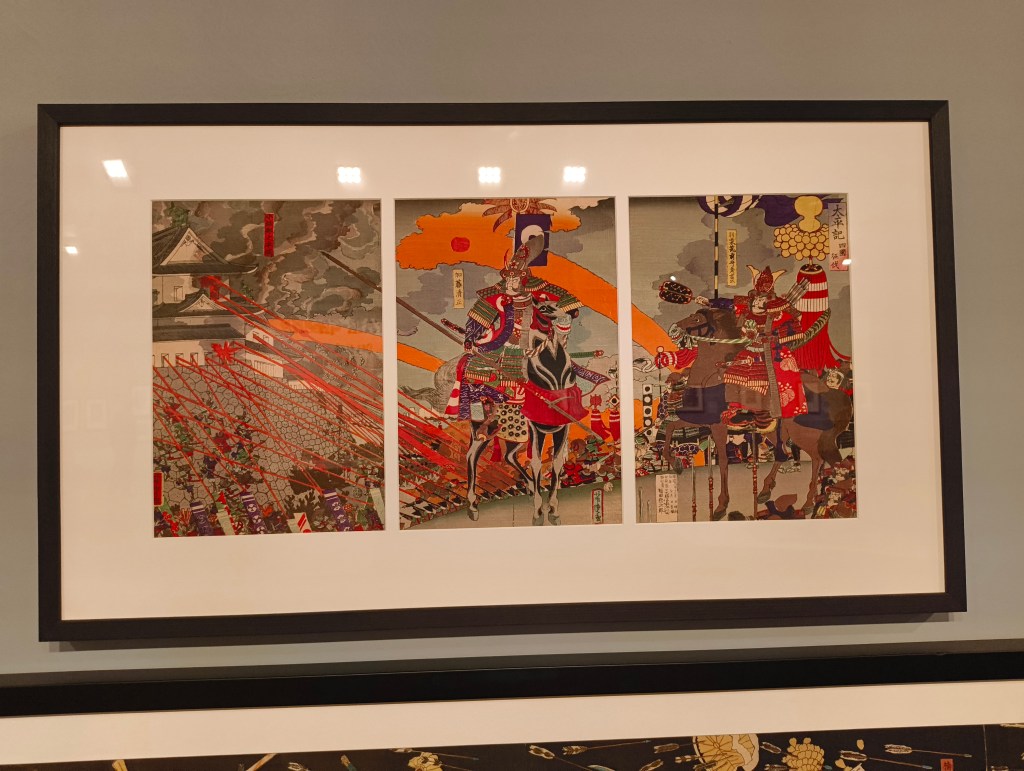
A particularly interesting detail is the depiction of gunfire during the conquest of shikoku, by artist Utagawa Yoshitora. The cross cultural influences of western style fire-arms, introduced in the 16th C by the Portuguese, with Samurai armor paints a complex picture of violence, captured in vivid reds almost absent from the previous rooms pre-occupation with water.
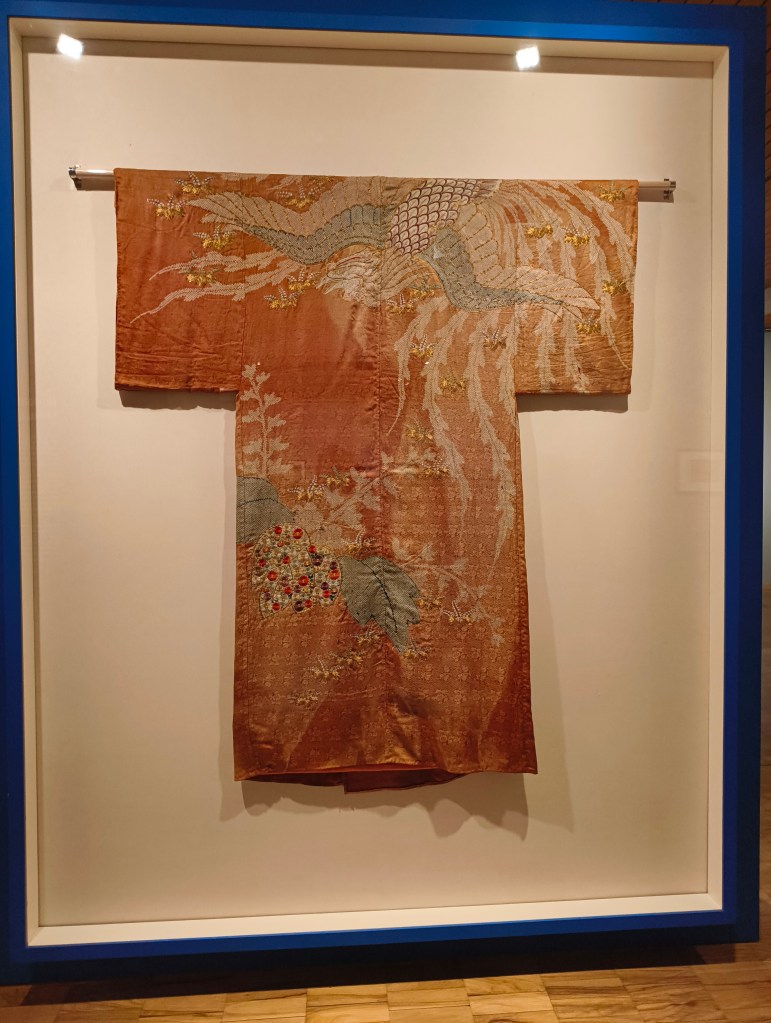
Many other artworks bring life and colour to the historical exploration. Different classes and professions are shown, alongside a pair of fabric artefacts, a Yogi and a Kimono, conjuring a tactile image of the dress and occupations of people from the time.
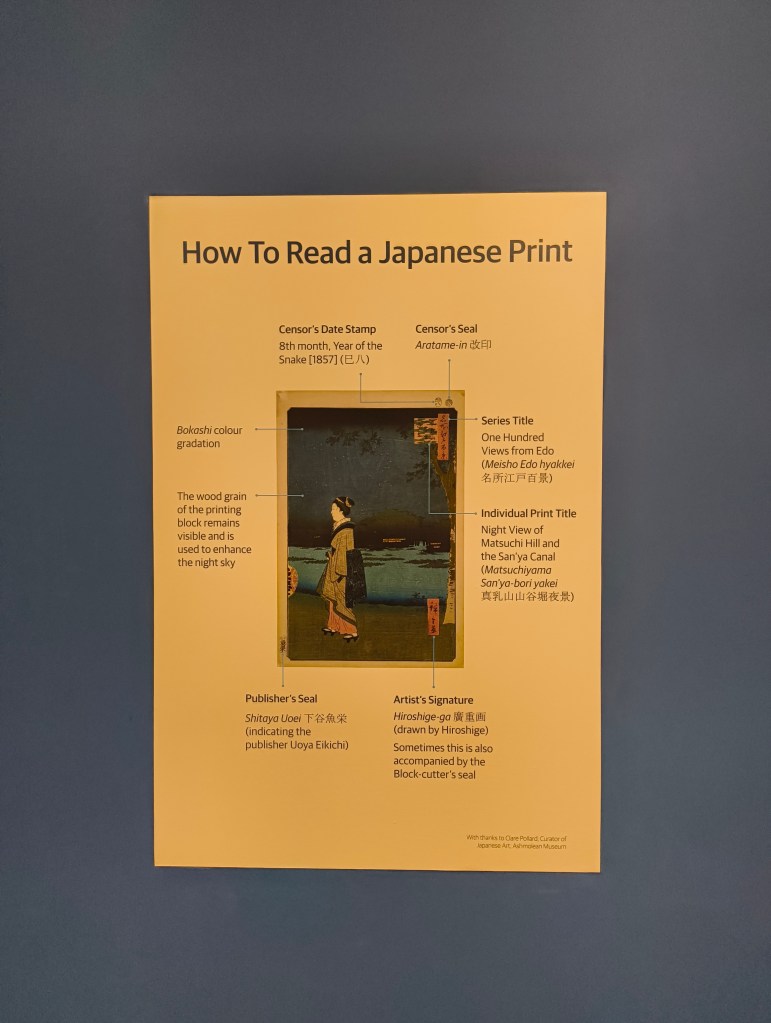
An excellent inclusion is a short section on how to read ukiyo-e prints. A pair of artworks depict the same image, however, due to the quirks of printing, have different intensities of colour. Accompanying text reads: “understanding how ukiyo-e prints were made helps us recognise subtle differences between impressions and appreciate each as a unique piece of work”.
In totality, the tranquility of the first room combined with the historical insight from the second creates an excellent exhibition. The quality of the art is second-to-none, both aesthetically pleasing, engaging, and informative. The mode of writing, in description and exhibition text, is commendable. It helps focus attention, but doesn’t outshine the artwork. Plus, the overall atmosphere is conducive to deep, slow looking.
While not a challenging space, this is definitely reflective, restorative, informative, and engaging. I would highly recommend a visit.

 Caleb
Caleb 
Leave a comment