Its interview season. In dribs and drabs, applications are paying off, and I am receiving a slew of invites to interview. In the midst of a busy day, I found time to visit Bolton Museum and Art Gallery. Bracketing, for the time being, discussions of the presentation of human remains – two rooms over lies the uncovered body of an unknown sarcophagi inhabitant – I took a spin around the museum’s art area. On display, highlights from the borough council’s collection, entitled ‘Art for Everyone’
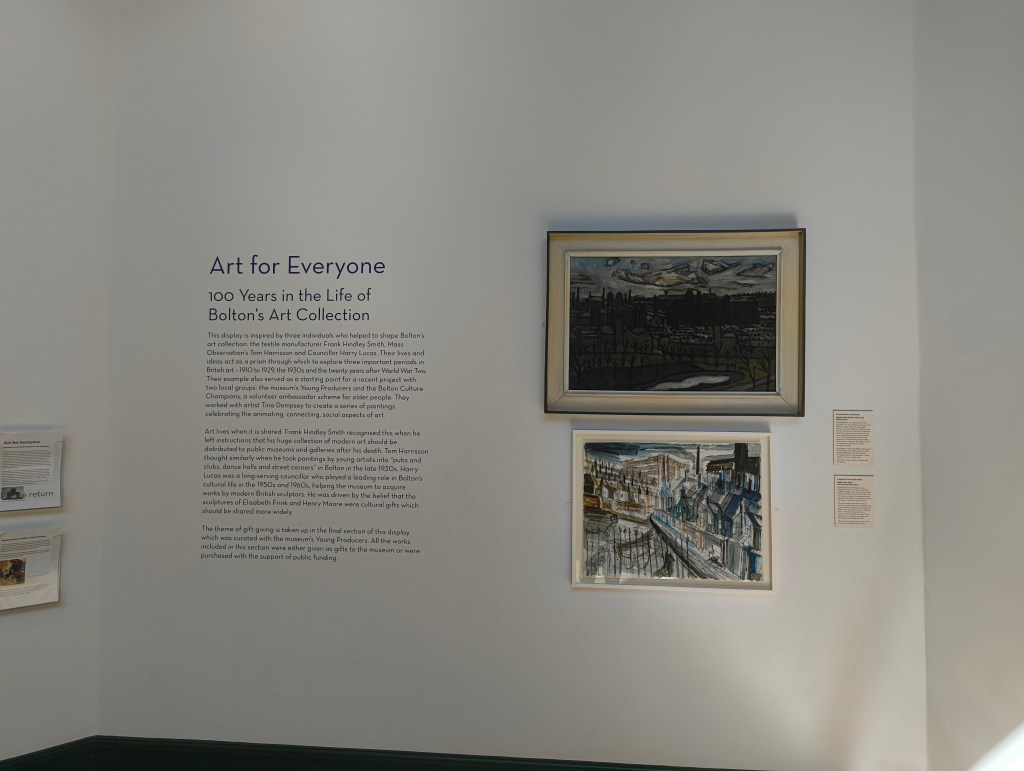
Now, as a motivation, Art for Everyone stands up. Bringing a collection out of the shadows and into the public is a commendable act. In practice, it becomes more about the original collectors than it does about the artists, the artwork, or the community. The collection remains in an even greater shadow, that of the original beneficiaries.
The question this selection of art left me with was: what work – or what role – is this collection playing for the community? Is it to challenge? To inspire? To represent?
To give it its dues, this exhibition does manage to inform. Split into three sections, with additional cabinets in the center, the artworks reflect different periods of collecting, and manage to link back to different times for Bolton.
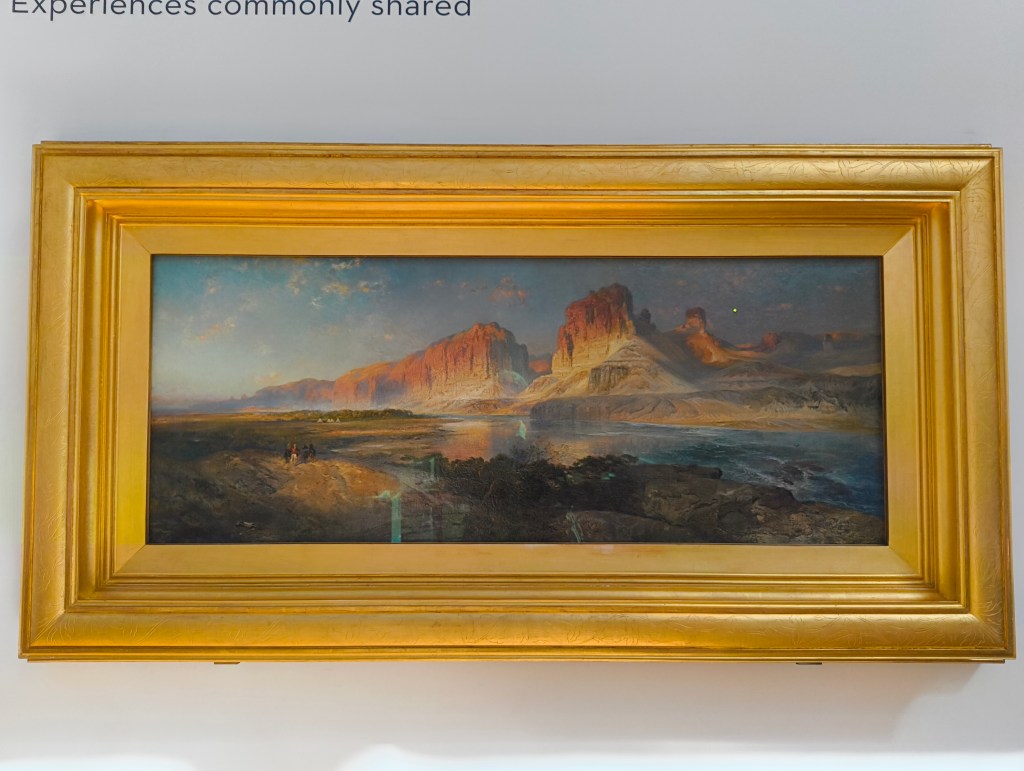
Our first collector is Frank Hindley Smith. A mill-owner who bequeathed much of his collection upon his death in 1939. Artworks linked to his collection reflect an interest in sublime landscapes, Chinese ceramics, and links to the Bloomsbury Group.
Smith is referred to, in writing, as a textile manufacturer. He is not – notably to me – referred to as either an industrialist or a capitalist. There is no discussion of his worldview and how – to me – it is reflected in the kinds of art he collected. This is a shame, as I think it would be an interesting approach.
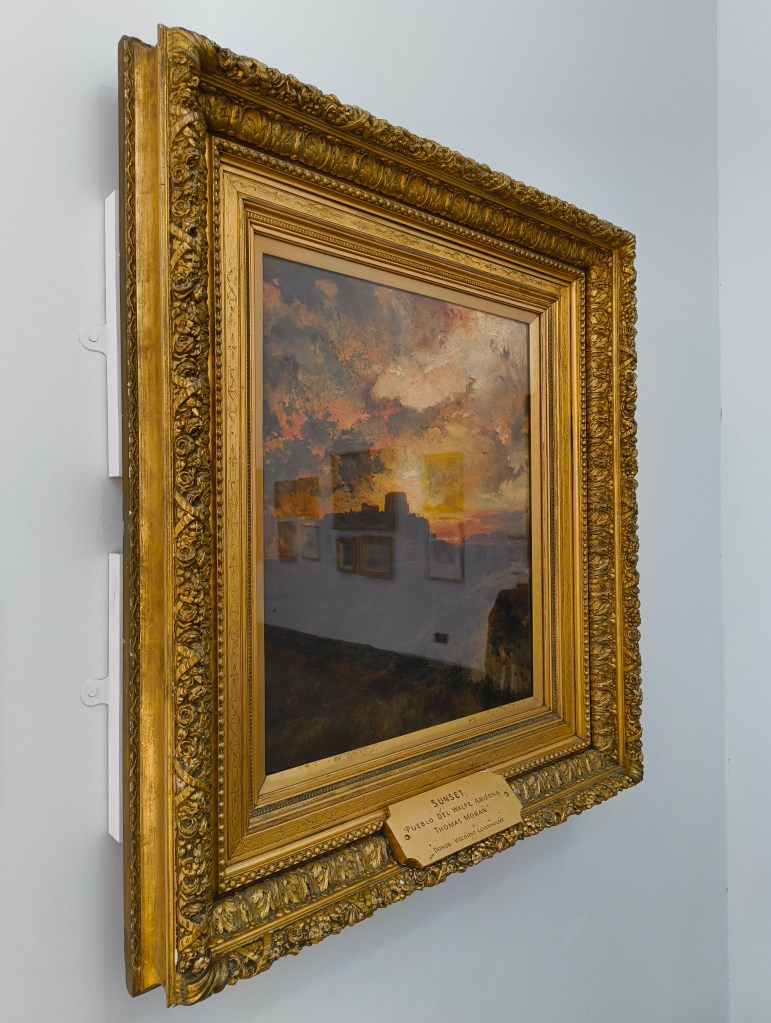
Instead, we are presented with a selection of paintings by Thomas Moran. A Bolton-born emigrant to America, these landscapes are gorgeous. In the same breath they evoke manifest destiny. The paintings depict Native Americans, painted in the same manner as the scenery they inhabit – tapping in to the noble savage myth. The gallery does little to assuage one from this reading. It helpfully notes the presence of the Walpi people, but focuses more on the natural formations of the landscape.
Bolton Museum has evidently collaborated with some ‘young curators’. They are mentioned here and there, their voice screened through passive descriptive text. In a rather damning move, the young curators are quoted as seeing Moran’s paintings as Biblical, then in the next line on preserving wilderness. This uncritically adopts the world-view of the painter – and potentially Smith, the collector – and repeats problematic romanticised views of Native American life and early American colonialism.
Now, I am picking at hairs here. However I feel that this is sloppy curation.
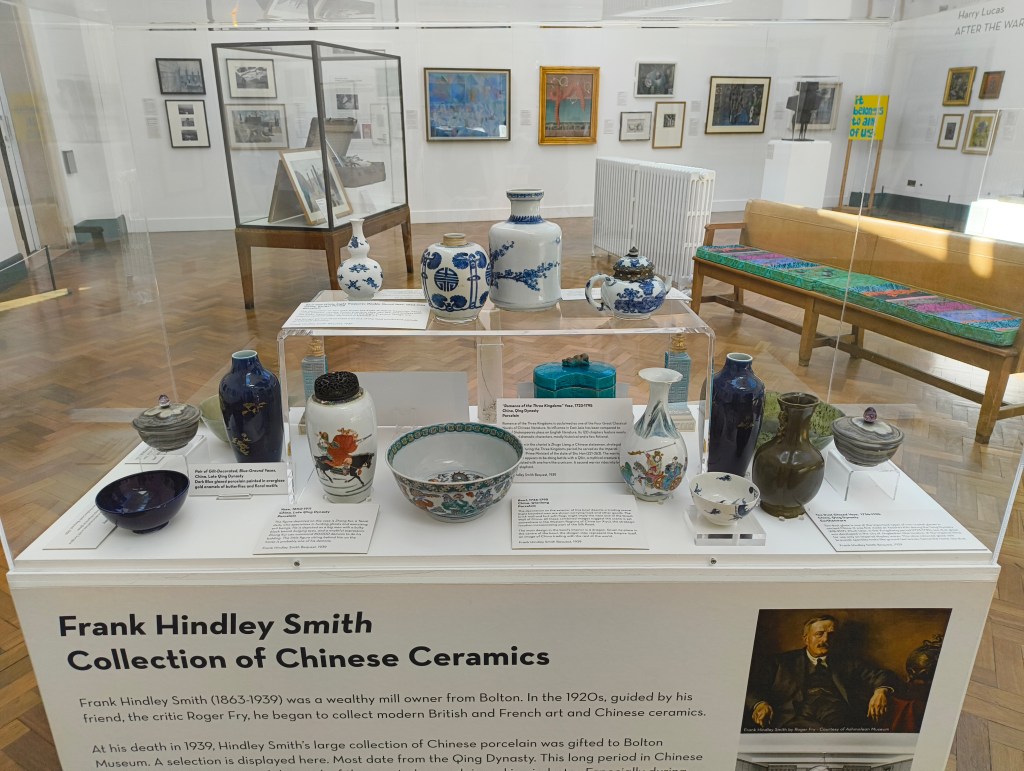
In a different vein, I am unimpressed with the display of Chinese ceramics – more of Smith’s collection. The cabinet is cluttered, diminishing their supposed role as treasures, with labels exploring the narrative of the images or fabrication techniques. What I want to know is how Smith acquired these, and how this can tell us a bigger story of the role of colonialism and industrialism in aesthetic taste making. How did Smith and his collection relate to Bolton then, and what does it mean for us today?
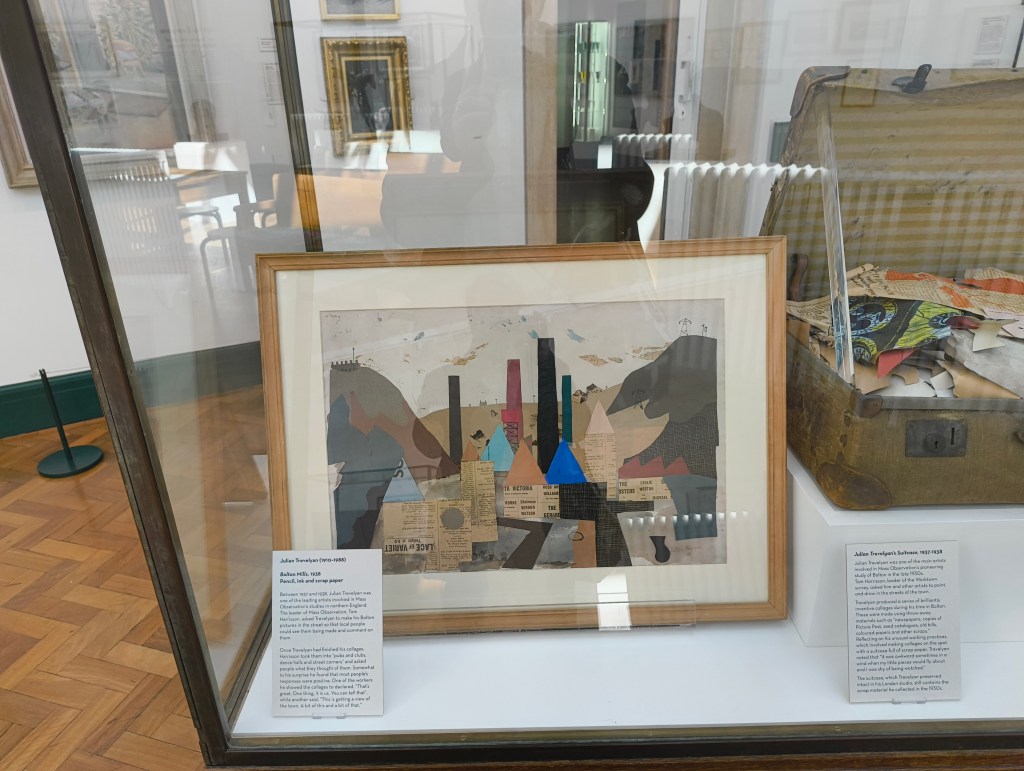
Our next section is more interesting. Drawing artwork from the collection of Tom Harrisson, we explore an intersection of Mass-Observation, British Surrealism, Bolton’s place in that narrative, and reactions at the time. A highlight is the story of Harrisson taking Julian Trevelyan’s collage work into Bolton’s pubs. He is surprised to get a positive reaction. Locals tell him that the artwork really captures them.
As for the actual artwork, its engaging, interesting. There are enough different approaches to surrealism that we can piece together a wider story. This is a successful section.
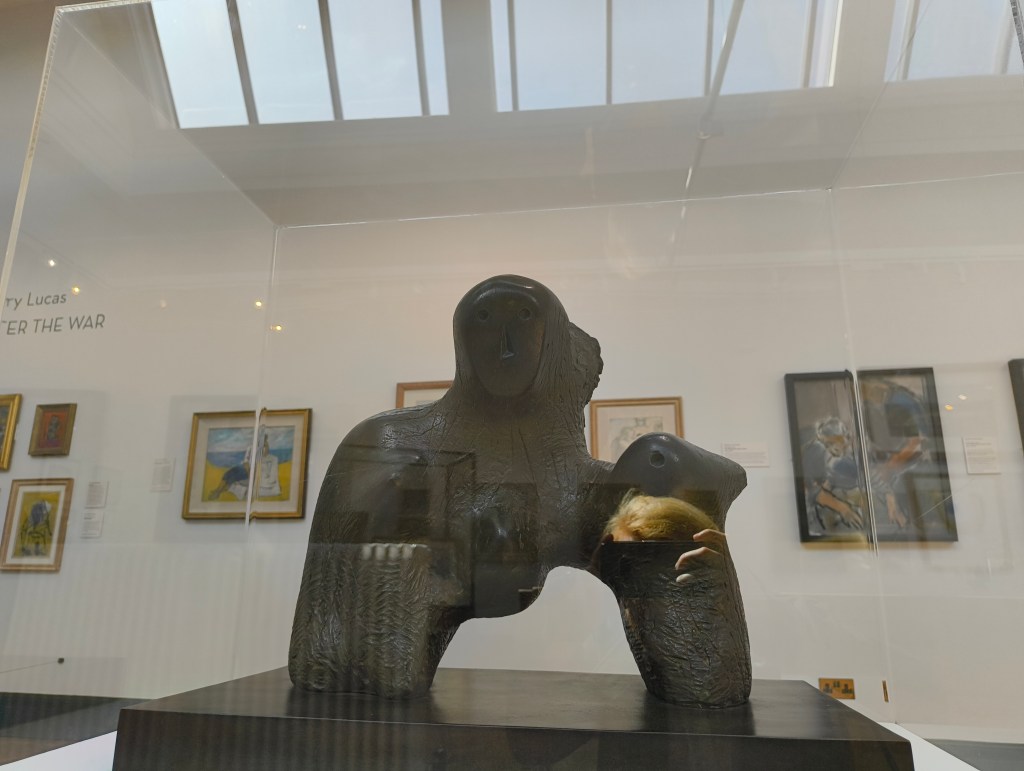
Our final section is on post-war collecting. There are some nods to the St Ives school with some Hepworths. A few Moore sculptures are excellent. They take me by surprise. I also learn that Moore was a founding member of the Campaign for Nuclear Disarmament. I didn’t know that beforehand.
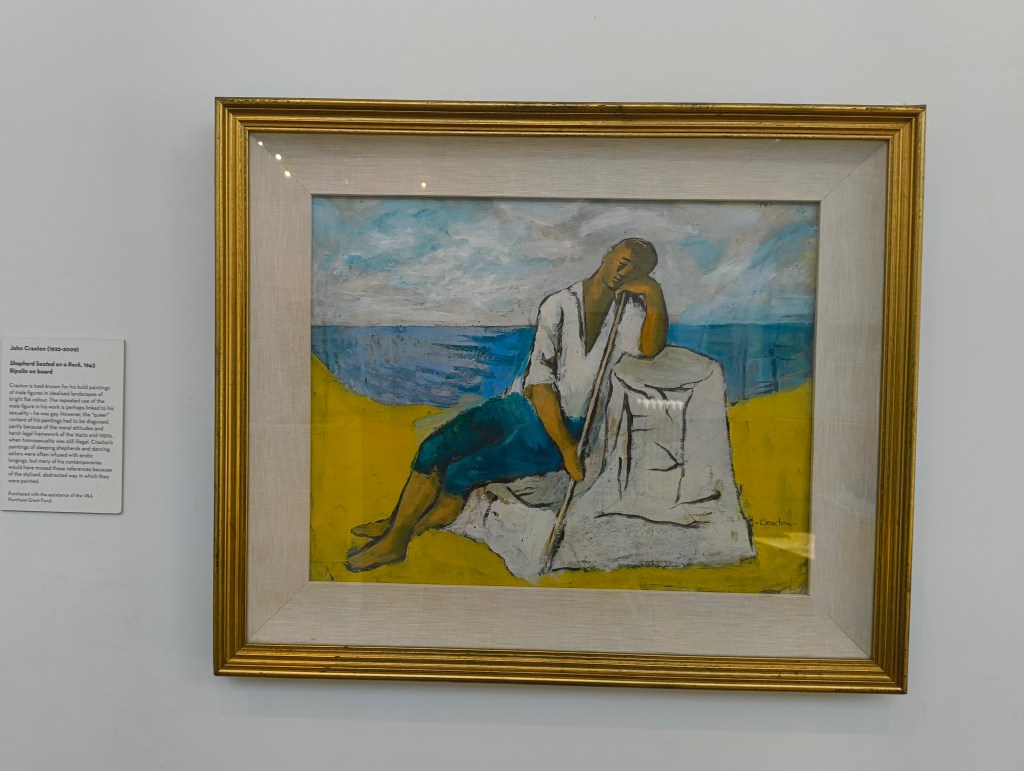
Before we leave, however, I have to note about how queer art is written about. A painting by Keith Vaughn is accompanied by text that explores its homoerotic core. It is informative and no cause for complaint. A painting by John Craxton, however, is described as “queer” in speech marks. I’m not sure why this rubs me the wrong way, but I think it hints at a bit of an obliviousness to writing about queer experience. The painting is excellent, by the way.
Overall, the theme of Art for Everyone leads to a messy and directionless display of good to excellent artworks. I am disappointed by how uncritical the exhibition is – especially towards Frank Hindley Smith – and am still uncertain what the exhibition hopes to achieve, beyond bringing art into the public eye. I feel like there is great potential for this space to engage better with Bolton’s community, and act as a space of challenge and change. While community consultancy was evidently part of the curation, it’s impact seems muted and unsubstantial. And that’s without even mentioning the human remains.

 Caleb
Caleb 
Leave a comment